


Welcome to Mental Garden. The following letter is part of our “Notes on giants“ collection, in which we explore the thoughts of humanity’s greatest minds.
To see the full library, click here.
🏷️ Categories: Attention, Learning, Deliberate practice.
Charles Darwin, the famous British naturalist, spent eight full years studying a group of organisms that most scientists of his time considered uninteresting: barnacles.
At first glance, they were simple creatures with little variation.
“They’re just barnacles,” anyone might have said.
Darwin knew that. That’s precisely why he chose them.
For years, he dissected thousands of specimens. He observed tiny variations among nearly identical individuals. He compared shapes, symmetries, internal structures, and differences between closely related species. He knew the theory, but he did not use it as a starting point.
He simply observed and took notes.
At first, the work seemed trivial. After weeks of study, Darwin believed he knew them quite well. But he didn’t stop. Months passed. Then years. And over time, details began to appear that had previously gone unnoticed: minute anatomical differences, patterns that only emerged after comparing hundreds of cases, exceptions that challenged established classifications… (Darwin, 1851)
The deeper he looked, the more complexity he found in what seemed simple.
When he published his study, he astonished the scientists of his time with its level of detail. It was the result of years of patient, methodical observation. It served as training for the great work that would come later: The Theory of Evolution.
With it, Darwin forever changed our understanding of life.
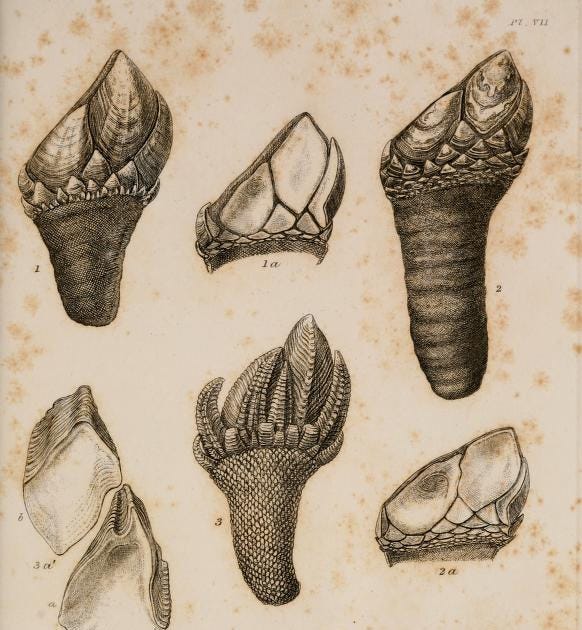

The art of comparing objects
After studying barnacles, Darwin learned something vital: the art of comparing objects.
How does this structure differ from another almost identical one?
How does this organism differ from the one right next to it?
What pattern appears only when hundreds of examples are observed?
The art of comparing objects is a crucial strategy in many areas of life.
Take studying, for example.
For years I studied “the way you’re supposed to study”: I highlighted, summarized, and reread my notes. I believed that if I wasn’t making progress, it was because I hadn’t found the right method. What I didn’t realize was that I never observed the actual results.
Where I was consistently making mistakes.
What I could explain without looking at my notes.
What kinds of concepts I remembered a week later.
What distinguished the topics that felt easy from those that didn’t.
When I started observing my performance, I realized the method wasn’t the problem.
I used the Feynman technique and spaced repetition. I didn’t notice improvement by switching methods. The drastic change came when I eliminated distractions. I used to study on a computer and always ended up jumping between tabs and getting distracted from my notes. On top of that, I often studied with other people and got interrupted constantly…
It wasn’t a method problem. It was an attention problem.
When I protected my attention, my performance skyrocketed instantly. The change happened when I compared what I thought worked with what actually worked.
That’s when I truly started learning.
Do the work yourself
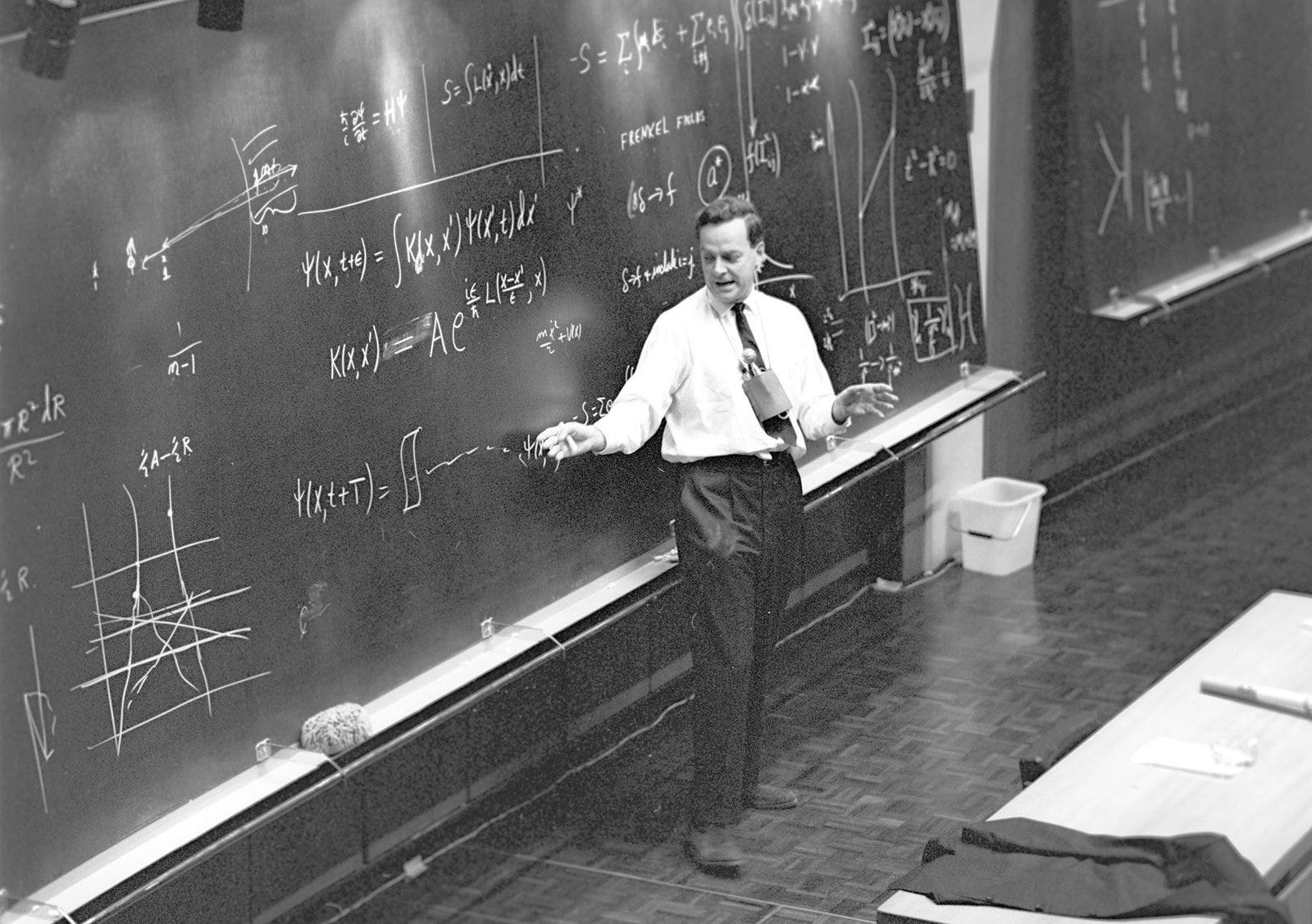
Richard Feynman himself learned this lesson the hard way.
When I became interested in beta decay, I read the reports of the “experts,” but I didn’t look at the original data. If I had been a good physicist, I would have immediately checked how well what the reports claimed was actually demonstrated. I would have realized right away that it wasn’t properly demonstrated.
Since then, I pay no attention to what “experts” say. I calculate it myself.
— Richard Feynman (1986)
When he became interested in beta decay, he trusted the reports of the “experts” without checking the original data. Only when he went back to the numbers himself did he realize that it had never been properly demonstrated. For years, no one had bothered to read or replicate the original study. All the experts simply studied each other without reviewing the foundational research everything was based on.
Feynman revolutionized everything simply by doing the calculations himself.
Look and verify it for yourself
Pick any field and you’ll discover that very few people actually do the work of observing.
Instead of reading the original study, most people quote the press headline.
When people say, “I read an article about climate change,” what they usually mean is: “I read a summarized analysis of an article about climate change.”
Instead of analyzing their own financial data and studying finance, many people simply repeat investment advice taken from a Twitter thread.
When someone says, “This habit works,” what they often mean is: “I saw on social media that it worked for someone else.”
That’s why doing the tedious work of observing gives you an overwhelming advantage.
The advantage is so powerful because you begin to understand why things are the way they are. You understand the exceptions, the elements involved, what is actually happening. Don’t blindly follow self-proclaimed experts. Always remember to observe for yourself.
Pay attention and verify it yourself.
Still curious? Here are 3 related ideas to explore further:
Feeling lost? This was Richard Feynman’s response to his student
The 7 principles of Richard Feynman for thinking clearly amid the noise
✍️ Your turn: In what areas of your life could you gain an advantage simply by paying more attention and running experiments yourself?
💭 Quote of the day: “The key to modern science is this idea: look at things, record the details, and hope that in that information there is a clue to a possible theoretical interpretation.” — Richard Feynman
See you next time! 👋

References 📚
Darwin, C. (1851). A Monograph on the Sub-class Cirripedia: The Lepadidæ; Or, Pedunculated Cirripedes.
Feynman, R. P. (1986). «Surely you’re joking, Mr. Feynman!»: Adventures of a Curious Character.
Tinkerin’ Thinkers. (2011). Richard Feynman - The Character of Physical Law - Part 1 The Law of Gravitation [Vídeo]. YouTube.
Bingo! And how many of us breeze through those social media posts, feeling like we understand the problem. guilty as changed! Thank you for this article, Alvaro. One thing I'd like to know is where do we find the original data to check for ourselves? OY!