


Welcome to Mental Garden, a newsletter about creativity, focus, and systems for writing and building projects on the internet. To explore the full library, go here.
The following letter is part of our “Notes on Giants” collection, in which we explore the thoughts and lives of humanity’s greatest minds.
🏷️ Categories: Continuous improvement, Deliberate practice.
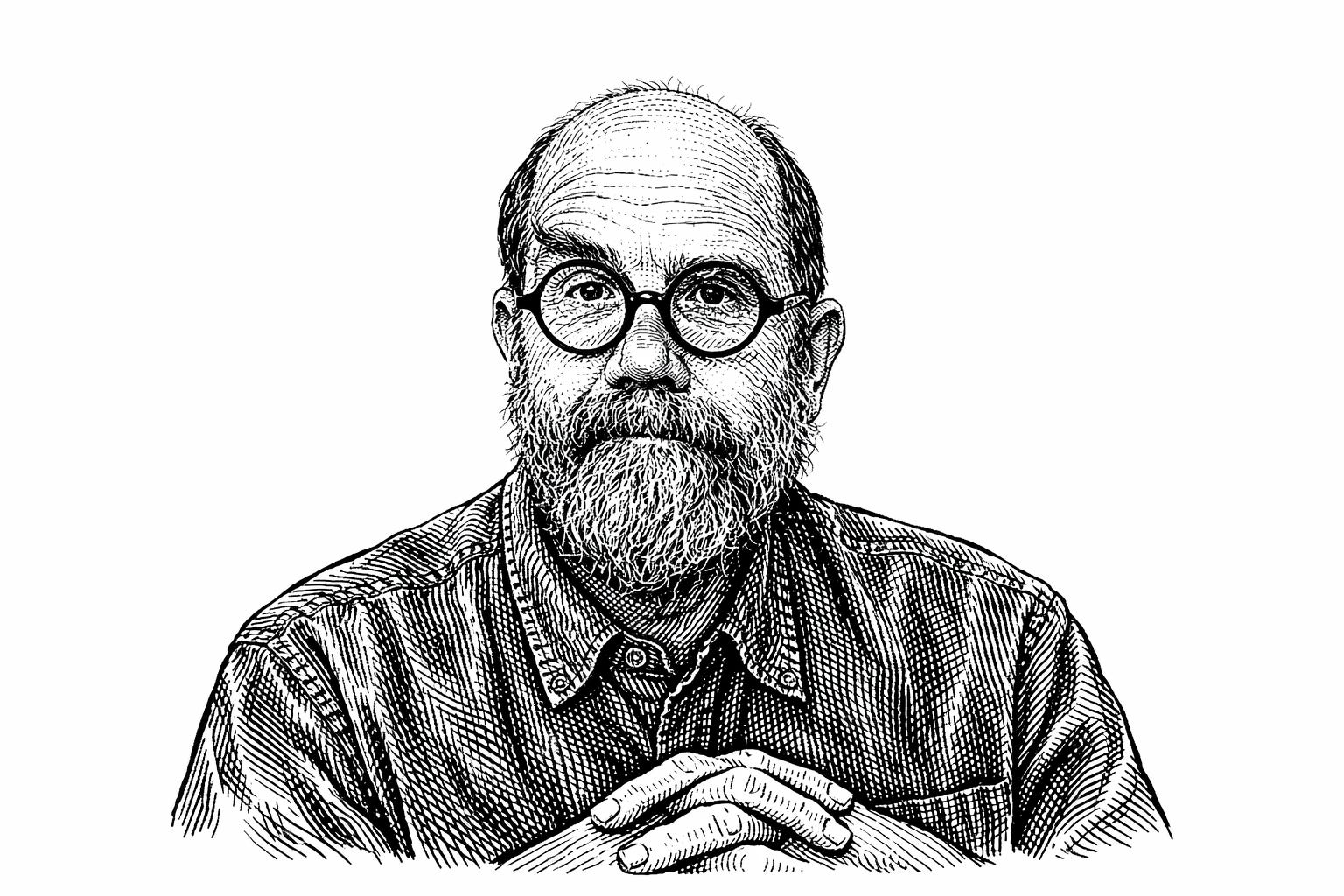
Chuck Close, one of the most renowned painters of his generation.
Besides his work, he is remembered for an unglamorous idea: “Inspiration is for amateurs; the rest of us just show up and get to work.” And he added something even more important: “If you just hang in there, you’ll get somewhere.” He said this from years of experience in his craft, after thousands of days of dedication. While many people imagine success and inspiration as a fleeting flash of brilliance, professionals do something less romantic, but far more effective.
They work every day.
Here is the hard truth: we don’t usually fail to make progress because of a lack of talent. It is often because we have romanticized the process too much. We wait for clarity, plenty of motivation, and a great idea, when in reality much of our growth comes afterward—not before—we get started. First comes the work. Then comes understanding. And afterward, almost without realizing it, the results begin to appear.
And if you think about it, Chuck’s idea about art is, deep down, a useful idea for almost any life and goal in which we want to succeed.

Big changes begin on ordinary days
The extraordinary rarely begins with a great idea.
Almost everything we do at first comes out a little clumsy. In the beginning, you barely master the basics, you make mistakes often, and your movements lack precision. But if you give it time and keep practicing, something magical happens: you start to see patterns, improve your technique, and notice the small details that used to escape you. What initially seemed like simply repeating mechanical actions gradually becomes real understanding and mastery. And so, almost without noticing, your level changes.
And this idea applies to every area of life.
Playing a new instrument.
Practicing a sport.
Learning languages.
Writing.
Singing.
Painting.
Many people see goals as great achievements. But it is more useful to see them as the consequence of improving your daily routine. Don’t obsess over the big accomplishment; think about raising your level a little every day: a small adjustment, a little more precision—that is enough to achieve extraordinary results over time.
That is why measuring your performance is vital: what isn’t measured doesn’t exist.
The process is liberating; you don’t have to reinvent the wheel every day. Today you know what you’re going to do, you could do what you did yesterday, and tomorrow you’ll do the same thing you did today, and for a certain period of time you can simply work. If you hang in there, you’ll get somewhere. — Chuck Close, Inside the Painter’s Studio.
You don’t need perfect conditions to start
This idea really struck me.
“I was never one of those people who needed a perfect situation in which to paint. I can make art anywhere, anytime; it doesn’t matter. I mean, I know a lot of artists for whom having the perfect space is essential. They spend years designing, building, and equipping the ideal place, and just when they are about to start working, they sell it and build another one. It seems to me that it’s a way of avoiding having to work. But I can paint anywhere. I’ve made big paintings in the smallest bedrooms, in garages, whatever.” — Chuck Close, Inside the Painter’s Studio.
Notice this valuable lesson.
Waiting for the perfect moment is often an elegant way of postponing the work.
This is the weak point of many people with great potential. Believing they need more time, more space, more energy, less noise, or a more orderly life. But sometimes all of that is secondary, and simply starting is what would make the biggest difference.
Think about it for a moment:
If you want to write, start by keeping a simple journal for a little while each night.
If you want to improve your fitness, adjust a few meals and go for a walk.
If you want to read more, leave the book somewhere visible and reduce the time you spend on social media.
Start imperfectly, perfect it later.
Aim for consistency, not intensity
Even with a good environment and everything in place, the most important thing is still missing.
Coming back tomorrow.
And the day after tomorrow.
And next week.
Chuck Close had a simple and effective work routine, which is why it worked.
“On a normal day, I paint from nine until twelve. Three hours in the morning. I eat at my desk, or if the weather is nice, I go to the pool. Or if it’s really nice, I go to the beach for an hour. Maybe I have lunch at the beach, and then I come back and paint from one to four, another three hours. That’s a typical day. I work every day there without exception.” — Chuck Close, Inside the Painter’s Studio.
There is no mystery in that routine.
What there is, however, is repetition. An organized day. There is nothing impressive about it, but that is precisely why it is real and effective. Applied to everyday life, this has tremendous value.
If you want to read more, you don’t need to read fifty books this month. You simply need to make reading a normal part of your life and take advantage of every free moment to read.
If you want to get in better shape, you don’t need a perfect week of training. You simply need a slightly better version of last week and to keep refining the process.
If you want to write better, you don’t need an immediate masterpiece. You simply need to write enough for practice to refine your ideas and your voice.
This is how real improvement happens.
Raise the bar gradually. Through continuous, almost imperceptible improvement.
Things come out of activity, and through working you will run into possibilities and open doors that you never would have imagined if you had stayed sitting around waiting for a great idea. — Chuck Close, Inside the Painter’s Studio.
That is how many coincidences, opportunities, and life changes come about.
Not before you start.
— Álvaro
Want to learn more? Here are 3 related ideas to explore further:
✍️ Your turn: What small habit, if you repeated it every day and kept raising the bar, would dramatically change your level within a year?
💭 Quote of the day: “Inspiration is for amateurs; the rest of us just show up and get to work. Things will emerge from the activity itself, and through working you will encounter other possibilities and open doors you never would have imagined if you had been sitting around looking for a great artistic idea.” — Chuck Close, Inside the Painter’s Studio.
P.S. I also offer 1:1 consulting to help you grow on Substack.
If you’re just starting out and don’t know how it works, or if you’ve been at it for a while but are stuck, this will help you. I’ll help you find your direction, position yourself as a leader in your niche, and build a system tailored to your needs for sustainable growth.
My credentials? Over 100,000 global readers in 2 years, 100% organic growth, with 400,000 monthly visits. All from scratch, writing all by myself in my spare time.
If you’re interested, email me at: jardinmental@proton.me
References
Fig, J., & Lee, L. (2009). Inside the Painter’s Studio.
Routine, for me, is the foundation of my mental health.