


Welcome to Mental Garden, a newsletter about creativity, focus, and systems for writing and building projects on the internet. To explore the full library, go here.
The following letter is part of our “Notes on Giants” collection, in which we explore the thoughts and lives of humanity’s greatest minds.
🏷️ Categories: Deliberate practice, Creativity.
Legend has it that one day Pablo Picasso was eating in a restaurant when someone approached him with a napkin in hand and asked him for a drawing. Picasso took the napkin, made a quick sketch, and handed it back in exchange for the absurd sum of one hundred thousand dollars. The person, of course, protested, because from the outside it seemed ridiculous.
“But it only took you thirty seconds.”
And Picasso replied:
“No. It took me forty years.”
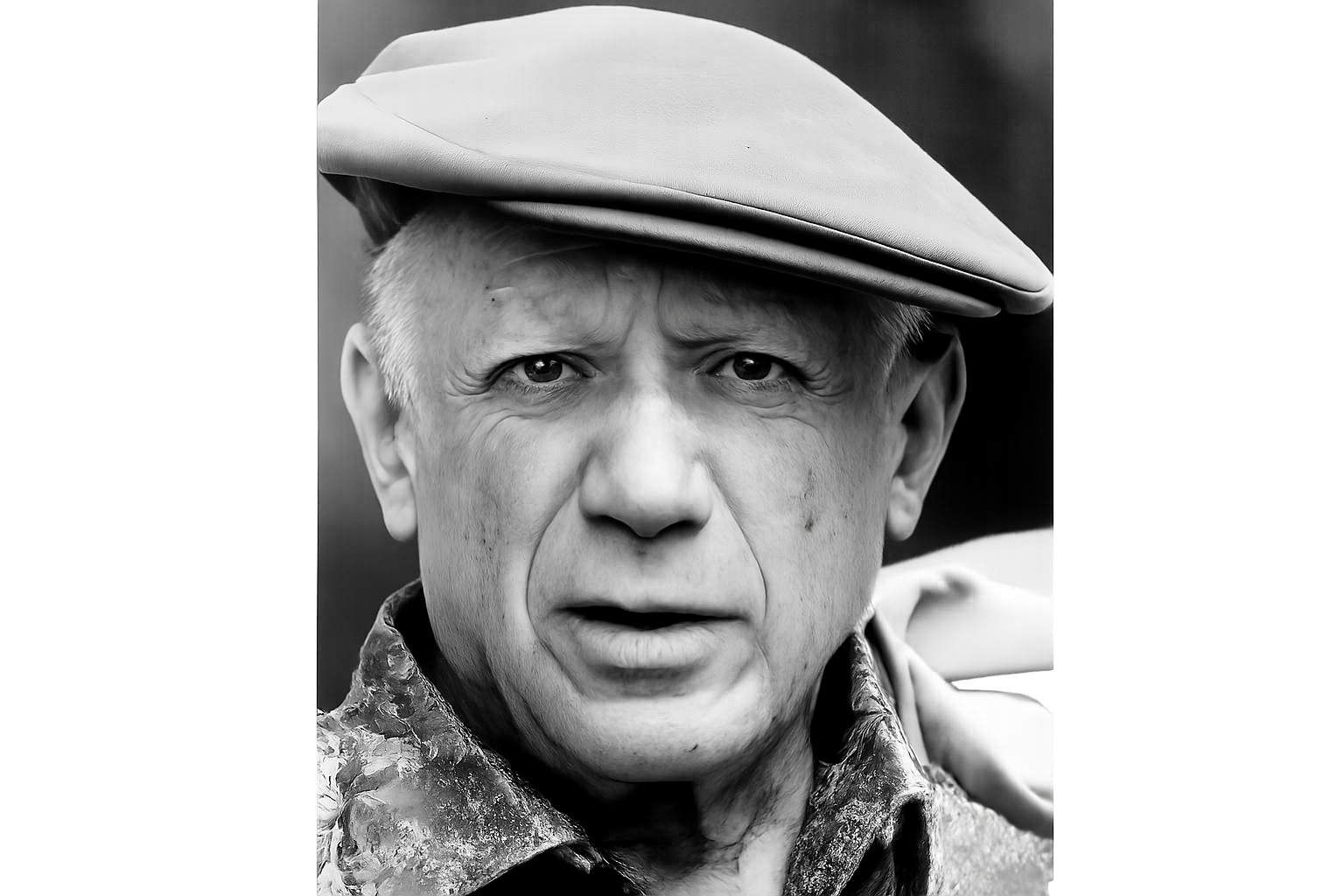

Although the story is perhaps too fabulous to be entirely real, Picasso did often paint sketches in bars. In any case, the story still gives us a valuable truth that we sometimes ignore…
What we see is always the thirty seconds.
We see the quick gesture, that grace with which someone does something that seems impossible to us, and instantly we call it “genius.” We assume it’s innate—if Picasso could draw like that, it must have been because he was Picasso. However, this ignores the most important part of the story: the forty years of practice.
No one sees the forty years.
No one sees the failed drawings, the smudges, the hours of study, the changes and experiments with different styles, the discarded ideas, the doubts… No one sees any of that, but all of it is inevitable. Picasso was not great because he could draw a beautiful sketch in thirty seconds; he was great because he had spent an entire lifetime preparing to be able to do that in thirty seconds.
That is the crucial difference.

Genius is not a coincidence
Picasso is often remembered as an eccentric, groundbreaking painter, but before he was eccentric and groundbreaking, he was a master of classical techniques. Between these two paintings of his, there are 40 years of difference.
Do they look alike?

Picasso broke the rules and became a genius after 40 years of practice.
It was all the result of a fierce accumulation of work during which he…
Academic training: Picasso painted the classical style with great skill.
Blue Period (1901–1904): he explored poverty, loneliness, and suffering with cold, melancholic tones.
Rose Period (1904–1906): he shifted to a warmer palette, with harlequins, acrobats, and circus scenes.
Primitivist phase (1907–1909): influenced by African and Iberian art, opening the door to a radical break from his previous style.
Cubism (1907–1914): together with Braque and Juan Gris, he dismantled traditional artistic perspective and changed the history of his discipline forever.
Classicism and Surrealism (1917–1937): he revisited Greco-Roman themes.
Late work (1940–1973): far from repeating himself, he continued experimenting with techniques and formats in highly varied ways.
In fact, according to Guinness World Records, Picasso is the most prolific painter in history, with about 13,500 paintings and designs, plus 100,000 engravings, 34,000 illustrations, and 300 sculptures and ceramics.
So no—there was no overnight success, nor was everything due to innate abilities. Behind that napkin he was asked to draw on were thousands of drawings, years of learning, changes in style, failures, obsessions, and a quantity of work no one sees.
That’s what we must not forget.
Talent may be visible in thirty seconds, but it is cultivated over years.
Whatever your passion is, learn to be invisible; genius will come. Patience.
Want to learn more? Here are 3 related ideas to go deeper:
The mathematical formula that predicts your success as an artist
Threshold Theory: Why intelligence doesn’t predict success in life
✍️ Your turn: What is something you do so well that others think it’s your talent? How long have you actually been cultivating that skill?
💭 Quote of the day: “Art does not evolve by itself; people’s ideas change, and with them their mode of expression.” — Picasso (Statement to Marius de Zayas, 1923).
See you next time! 👋

fascinating essay, alvaro. it's true what you posit. picasso's eyes in that portrait are so intense. i think i can see his 40 years of experience in his dark eyes. keep going, alvaro. i'm following. ur fan, j.
Gracias, Alvaro, I'll keep on keepin' on. 😇