


Welcome to Mental Garden, a newsletter about creativity, focus, and systems for writing and building projects on the internet. To explore the full library, go here.
The following letter is part of our “Notes on Giants” collection, in which we explore the thoughts and lives of humanity’s greatest minds.
🏷️ Categories: Life lessons, Solitude, Attention.
As children, we possessed an infallible inner compass.
We knew exactly what we liked, what we wanted to wear, and who we wanted to be. But as we grew older, external noise, the constant search for validation, and the flood of opinions on social media dulled that intuition, making us question our essence. We ask ourselves whether this haircut suits us, whether we should buy this or that, how we should behave, or worse still, whether the path we’re on is the “right” one.
Who am I, and what am I doing with my life?
I’ve been there. That emptiness of no longer knowing what you identify with or what to do. During one of those necessary pauses, I came across essays by the 16th-century philosopher Michel de Montaigne, who had asked himself the same questions and wrote down his thoughts. It was exactly what I needed to read.
If today you feel a little lost, I’ve distilled Michel de Montaigne’s ideas into 2 key principles to help you get to know yourself again.
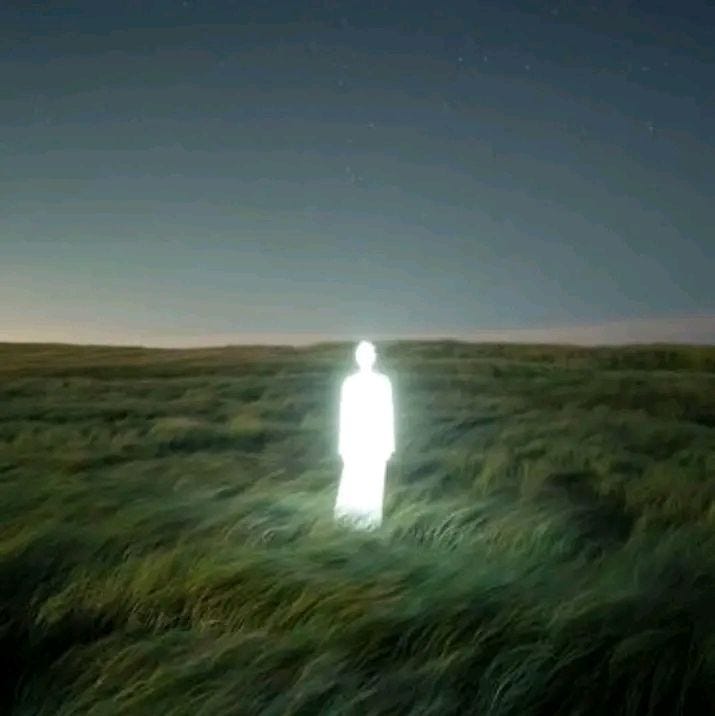

1. Looking inward
We fear solitude because there is nowhere to hide. When we are alone and without external stimulation, we face our own ideas and contradictions. Yet we spend much of our day looking outward. As Confucius said, and Montaigne also echoed, self-knowledge—observing oneself—is fundamental.
“I turn my gaze inward. I fix it there and keep it occupied. I observe myself continuously.” — Michel de Montaigne, Essays.
There, your patterns and tendencies are revealed, and you begin to understand how you act.
“We are all patchwork, so formless and diverse in composition that each piece, each moment, plays its own game.” — Michel de Montaigne, Essays.
Alright, it’s clear that self-knowledge is necessary, but…
How do we put this into practice?
By writing.
Montaigne did it through his essays; another way is through a journal. Anything that records your life and allows you to analyze it later works. I believe journaling is the most powerful tool, because it pulls your thoughts out of the mental fog each day and gives them shape. Re-read it weekly and observe how you evolve month by month.
What emotions dominate, and when?
What thoughts occupy your mind these days?
With whom are you doing well, with whom not, and why?
What things or moments drain your energy, and which ones give you energy?
How much progress did you make today toward the goals you had in mind?
Your journal is your space of absolute freedom for self-discovery.
Take time each day to reflect on questions like these. Your journal is the place where you are not an employee, a child, a spouse, or a citizen with obligations. You are simply you, facing the mirror that is the page. As Carl Jung said: “Who looks outside, dreams; who looks inside, awakens.”
Start today with a pen and paper and try it for a week.
2. Reducing noise
Montaigne’s 16th century was marked by religious wars and political turmoil; ours is marked by the tyranny of others’ opinions, the endless stream of data, opinions, stimuli, and demands at all hours.
To belong to oneself, one must learn the art of limitation.
We are often sold the idea that “more is better”: more followers, more books on the shelf, more contacts in the address book… but it isn’t so. An abundance of options is the graveyard of depth. This is not about going to live in a cave or rejecting social life. Montaigne loved his land, his books, and his friendships. But he saw that if you give all your energy to the world, nothing is left for the most important inhabitant: yourself.
As he said: “Lend yourself to others, but give yourself to yourself.”
When you “lend yourself,” you are fulfilling roles: the efficient employee, the agreeable friend. This is necessary; it is part of living in society. But when you “give yourself” to yourself, you regain sovereignty. The problem arises when, out of fear of judgment, we fully surrender ourselves.
How do we put this into practice? The key is attention hygiene.
You cannot stop the world from making noise, but you can decide what volume you allow to enter your mental house. Here are everyday examples:
Prioritize your space: Start your morning without checking external noise. Dedicate the first 30 minutes of your day to yourself: your project, your coffee, your journal, etc. Before letting the voices of others (or algorithms) enter your space, fill it with your own voice.
Filter your digital environment: Do a brutal cleanup of content. I used to follow hundreds of social media accounts; today it’s fewer than 20. I used to subscribe to dozens of YouTube channels that only added noise and wasted my time. Now I follow only 18 channels that truly add value. If content doesn’t make you think, act, or feel calm, it’s almost certainly noise.
Question your commitments: I used to say yes to every plan just to avoid disappointing people. Now I only join those that truly allow me to connect with the people involved and the experience we’ll have. The rest—the ones I used to do out of obligation—are gone. Everyone knows that if I show up, I’ll be fully present; if I don’t, it’s because something required my presence more strongly, even if that day it’s just lying on a bench watching the clouds.
When you reduce noise, you discover you have more free time than before, more energy, more mental clarity. You stop blurring your identity with what the world demands from you and start identifying the non-negotiable aspects—those traits that define who you truly are and which you would never remove, because doing so would feel like erasing your identity.
I’m talking about letting go of goals, people, and possessions.
When you remove the non-essential, what remains is essential: you.
“I want to be seen here exactly as I am, simply, naturally, and ordinarily, without effort or artifice; for it is myself I am portraying.” — Michel de Montaigne, Essays.
I’m going for a walk. See you soon.
— Álvaro
Want to learn more? Here are 3 related ideas to go deeper:
✍️ Your turn: If you had to reduce every aspect of your life by 90%, what would still remain by your side without hesitation? Think of people, possessions, daily habits…
💭 Quote of the day: “I live day by day and am content with having enough to satisfy my present and ordinary needs.” — Michel de Montaigne, Essays.
P.S. I also offer 1:1 consulting to help you grow on Substack.
If you’re just starting out and don’t know how it works, or if you’ve been at it for a while but are stuck, this will help you. I’ll help you find your direction, position yourself as a leader in your niche, and build a system tailored to your needs for sustainable growth.
My credentials? Over 94,000 global readers in 2 years, 100% organic growth, with 250,000 monthly visits. All from scratch, writing all by myself in my spare time.
If you’re interested, email me at: jardinmental@proton.me
References 📚
De Montaigne, M. (1993). The complete essays.
I've noticed a change in the trajectory of your articles, Alvaro. A year ago, your articles talked about productivity and organization of environment, etc. Recently, you've become more contemplative of the inner self. Spending your time looking at clouds or going for a walk. Bravo! You've turned in a direction at a fairly young age that often takes people decades to discover. Enjoy your walk today.
lovely, insightful piece, alvaro. thank you for introducing me/us to Michel de Montaigne. and your offer at the end, the 1:1 consultation is interesting. is this a new offering? either way, keep going. we enjoy and admire your timely essays. thank you. ur fan, j.