

The curse of Tutankhamun and the mental error we continue to make
The psychological explanation behind myths, stereotypes, and bad decisions

🏷️ Categories: Decision making and biases, Mental models.
Humans have always sought extraordinary explanations for mysterious events.
In 1922, archaeologist Howard Carter opened the tomb of Pharaoh Tutankhamun in the Valley of the Kings, Egypt. The find was one of the most important archaeological discoveries of the 20th century. Shortly afterward, Lord Carnarvon, the expedition’s sponsor, died unexpectedly (Luckhurst, 2012).
Newspapers quickly published the story: it was the “curse of the pharaoh.”
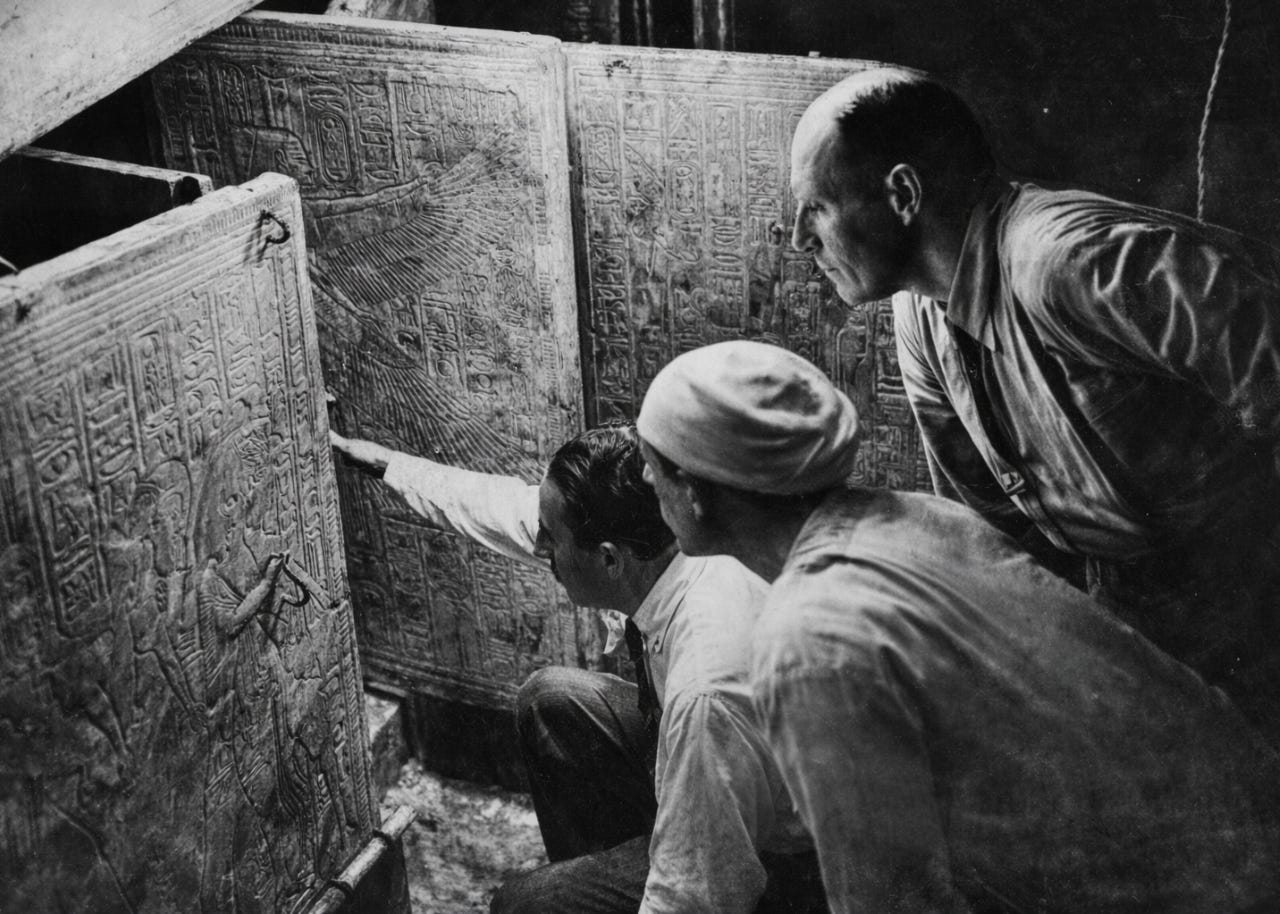

It was said that anyone who disturbed the eternal rest of Pharaoh Tutankhamun would suffer fatal consequences. In fact, in the following years, other people connected to the expedition also died. Each new death seemed to confirm the warning. The story fit too well to ignore… (Luckhurst, 2012)
But when all the facts are examined, the narrative begins to fall apart.
Most members of the team lived many years after the discovery. Some even outlived the average life expectancy of the time. There was no unusual death rate. No alarming pattern, nothing strange.
And yet, the curse remains part of the popular imagination.
What’s going on here? Why do we remember those deaths so intensely?
It’s easy to think this story belongs to the past, to a more superstitious era. But the same pattern that created the “curse” is still present today in financial decisions, in our judgments about other people, in the fears and beliefs we accept without questioning. The people who believed in the curse were not naive.
They were making a common mental error that we all make every day.
An error that can lead us to draw the wrong conclusions about our work, our relationships, and our opportunities. Psychologists call this reasoning flaw of the brain “illusory correlation.”
And once you learn to spot it, you start seeing it everywhere.
Here’s how it works (and how you can avoid it)…

How We Fool Ourselves Without Realizing It
Illusory correlation arises when we heavily emphasize one outcome and forget the rest.
For example, imagine you post an opinion on social media. Shortly afterward, two people reply with harsh comments. Another leaves a sarcastic message. Maybe someone else questions your intentions.
When recalling what happened, it’s easy to conclude that “social media is full of hate.”
However, you forget all the people who read your post without reacting negatively. You forget the likes, the views, or the neutral comments. Those were the majority of cases but less memorable, because nothing striking happened. As a result, it’s easier to remember a handful of criticisms than a hundred positive or neutral reactions.
Here’s where science comes in.
Hundreds of studies have shown that we overestimate the importance of events we can easily remember and underestimate the importance of events that are harder to recall. The easier something is to remember, the more likely we are to create a strong relationship between two things that are weakly related—or not related at all.
That’s what’s called illusory correlation.
And it affects every area of our lives.
How to Detect an Illusory Correlation
There’s a simple strategy you can use to uncover your hidden assumptions and avoid falling into an illusory correlation. In statistics, it’s called a “contingency table,” and it forces you to recognize the events that usually go unnoticed.
Let’s analyze the possibilities in the case of Tutankhamun’s supposed curse.
Contingency Table: The Curse Myth
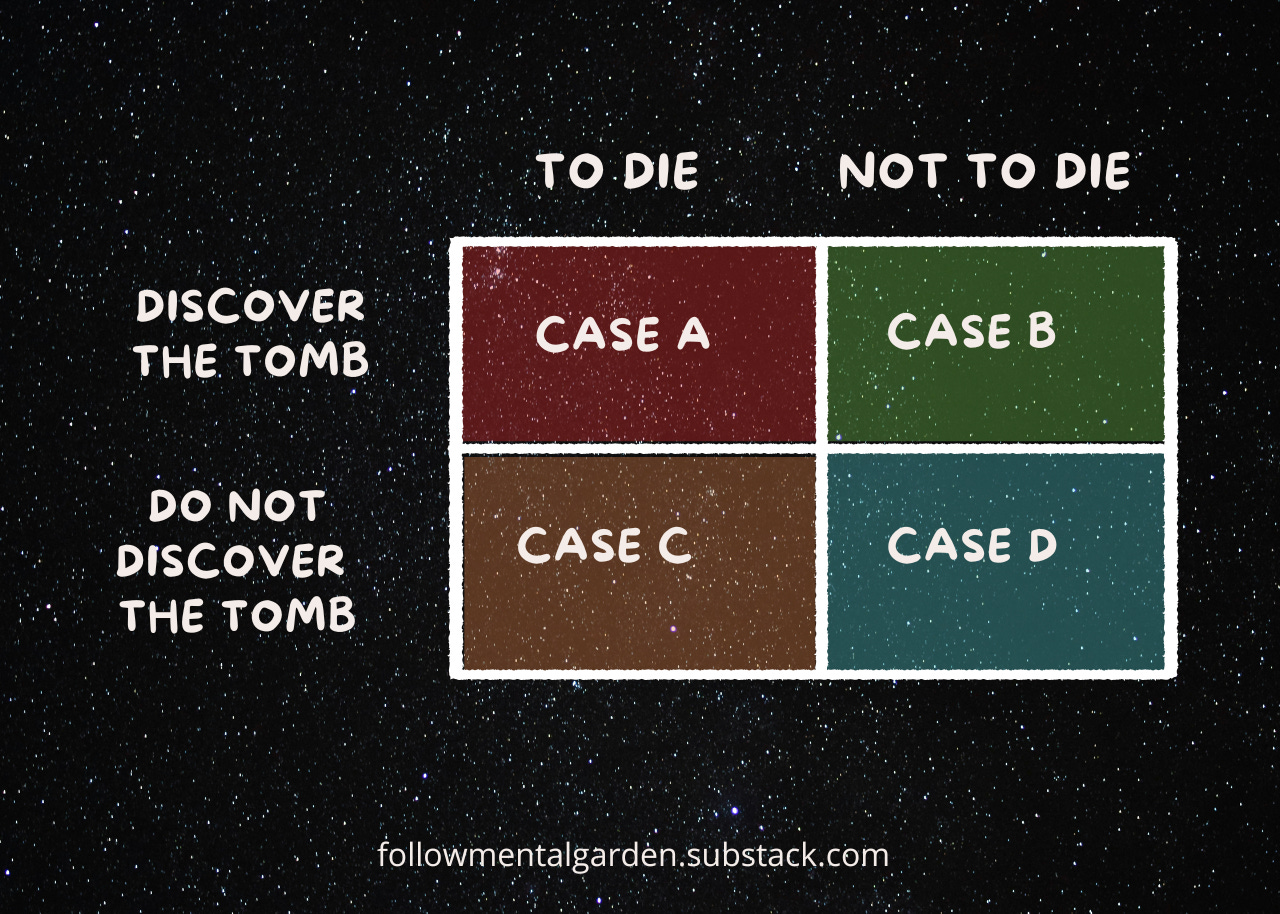
Case A: Discovery of the tomb and subsequent death. This is a very memorable combination and is overvalued in our memory because it’s shocking.
Case B: Discovery of the tomb, but long and normal life. This is a neutral event and is underestimated in our memory because nothing unusual happened. It’s hard to remember something in which nothing happened, and we tend to ignore this case.
Case C: No connection to the tomb, but death from natural causes. This is dismissed in our minds because it’s the most common type of death.
Case D: No connection to the tomb and normal life. Nothing memorable happens: no link to the tomb and no death. Completely forgettable.
This contingency table reveals why the myth spread.
The minds of those who believed in the curse remembered the death that followed the discovery but forgot the many times someone participated in the expedition and lived for decades without issue. Because they could easily recall the “tomb + death” connection—and it carried a mysterious aura—a strong relationship was created.
A strong and false relationship based on the intensity of two memorable events.
This simple and useful tool can be adapted to many different situations. To use it, place the frequency or number of occurrences of each event into the four cases. That way, you can compare the real frequency of each event—which will often be very different from the frequency you easily remember.
In this example, Case A was the most memorable, but not the most representative of reality.
Be Careful with the Stories We Tell
The story is always the same.
You hear an entrepreneur say that for years they slept five hours a night, worked weekends, took no vacations, and sacrificed their social life… and now they run a successful company and are a millionaire.
The story is powerful: Extreme sacrifice → extraordinary success.
And your mind starts connecting the dots.
But you never hear about all those who also slept little, worked relentlessly, and still failed. No one interviews those who burned out and closed their businesses. We don’t read headlines about those who succeeded without sacrificing so much either.
It happens everywhere.
You meet several people from a certain nationality who share a specific trait: they’re unpunctual, or cold, or excessively direct. After several similar experiences, you start to think: “They’re just like that.”
Your mind creates a clear association: nationality → behavior.
But you don’t keep track of all the people from that same nationality who don’t fit the pattern. You don’t register the neutral cases. You don’t even know 0.1% of the people in that country. And you don’t know why these specific individuals behaved the way they did.
You remember only the coincidences because they are memorable.
Most of us are unaware of how our selective memory influences the beliefs we hold. We are very bad at remembering things that didn’t happen. If we don’t see something, we assume it has no impact or rarely occurs.
If you understand this and use the contingency table, everything changes.
You can uncover hidden assumptions you didn’t even know you had and correct flawed thinking that affects daily life and distorts decisions.
Correlation is not causation.
Want to Learn More? Here Are 3 Related Ideas to Explore:
Appearances can be deceiving: Correlation and causation are not the same
Illusion of control: Why the brain needs certainty (even if it’s false)
The 10 most dangerous logical fallacies (and how to avoid them)
✍️ Your turn: What events are you remembering intensely that might be statistically irrelevant?
💭 Quote of the day: “Most days of the year are unremarkable. They begin and end without lasting memories in between.” — Scott Neustadter, 500 Days of Summer
See you in the next letter! 👋

References 📚
Luckhurst, R. (2012). The Mummy’s Curse: The True History of a Dark Fantasy.
This is suck common human thinking, we don't even realize we're doing it. It's just normal assessment, but so often it's wrong, as you point out here. That chart is a good idea.