


Welcome to Mental Garden, a newsletter about creativity, focus, and systems for writing and building projects on the internet. To explore the full library, go here.
The following letter is part of our “Notes from Giants” collection, in which we explore the thoughts and lives of humanity’s greatest minds.
🏷️ Categories: Deliberate practice, Continuous improvement.
Jiro Ono is one of the greatest sushi masters in history.
Many of the technical innovations of modern sushi-making that are now used around the world come from him. His restaurant, Sukiyabashi Jiro, was the first sushi restaurant to earn 3 Michelin stars. His skill is so exceptional that in 2011 the documentary Jiro Dreams of Sushi was released, showcasing both his culinary excellence and his extraordinary discipline as a chef.
As if that were not enough, Jiro Ono is 100 years old and still cooking.

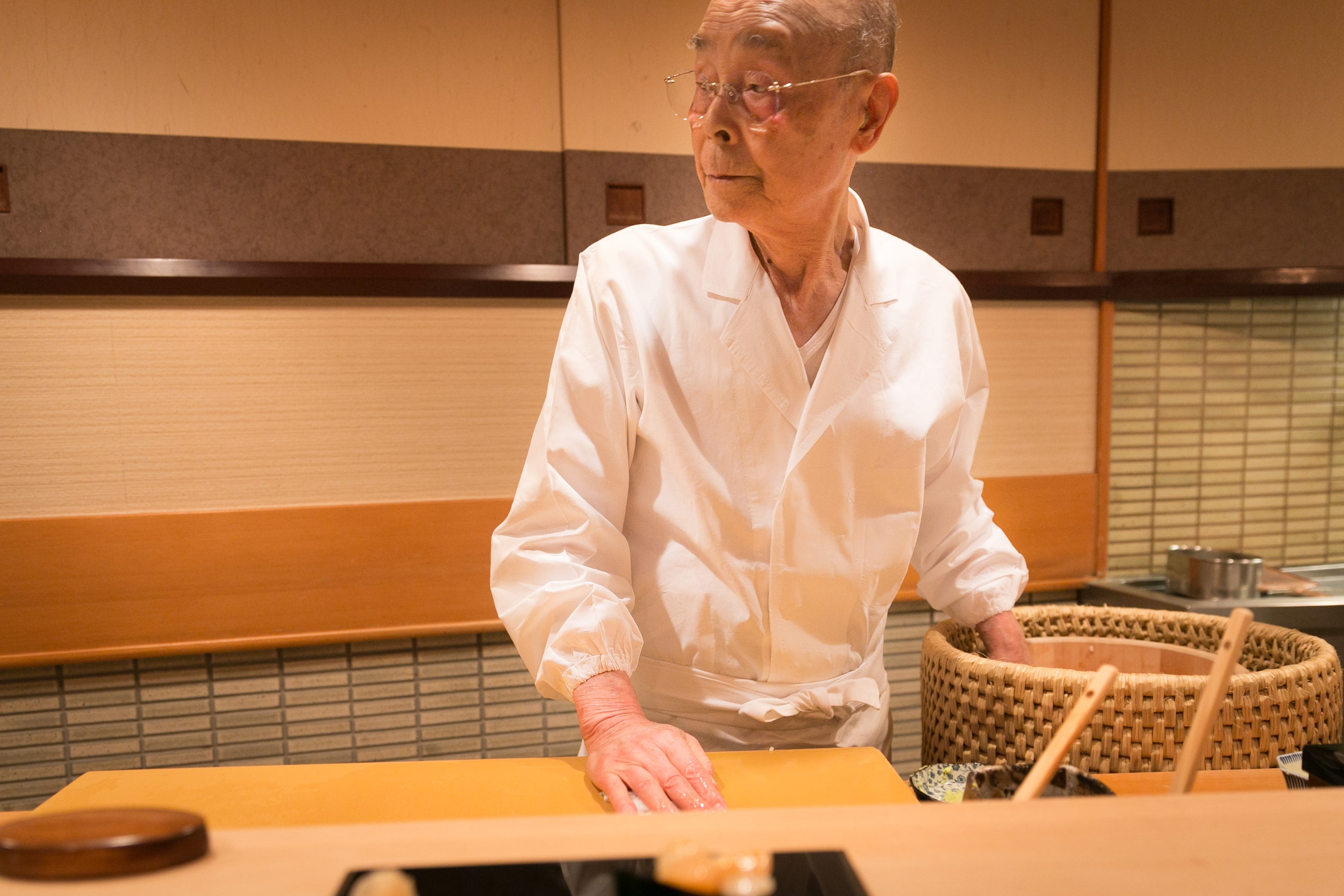
These great achievements were not accidental.
Jiro Ono spent much of his life behind a sushi counter in Tokyo, repeating gestures so small they could seem insignificant: the pressure of his fingers on the rice, the thickness of a slice, the size of each piece, the precise proportion of every ingredient. They may seem like tiny details, but together they produce extraordinary results.
But Jiro did not achieve excellence simply because he worked long hours.
He achieved it because he devoted his life to refining every part of the process. It was not enough for him to simply “make” sushi. He wanted to understand how to improve the rice, the fish, the knife, the rhythm of the service, the sequence of the menu, and the final texture of each bite.
Making sushi is much more than serving fish and rice.
It requires going deeper and perfecting every detail.
Just as Jiro did, his apprentices advanced step by step. Before touching the most delicate pieces, they had to master smaller tasks. In fact, one of his apprentices took years before he was allowed to handle the tamago, a simple omelet. Jiro made him repeat it hundreds of times until he reached the level required for it to be considered excellent (Gelb, 2011).
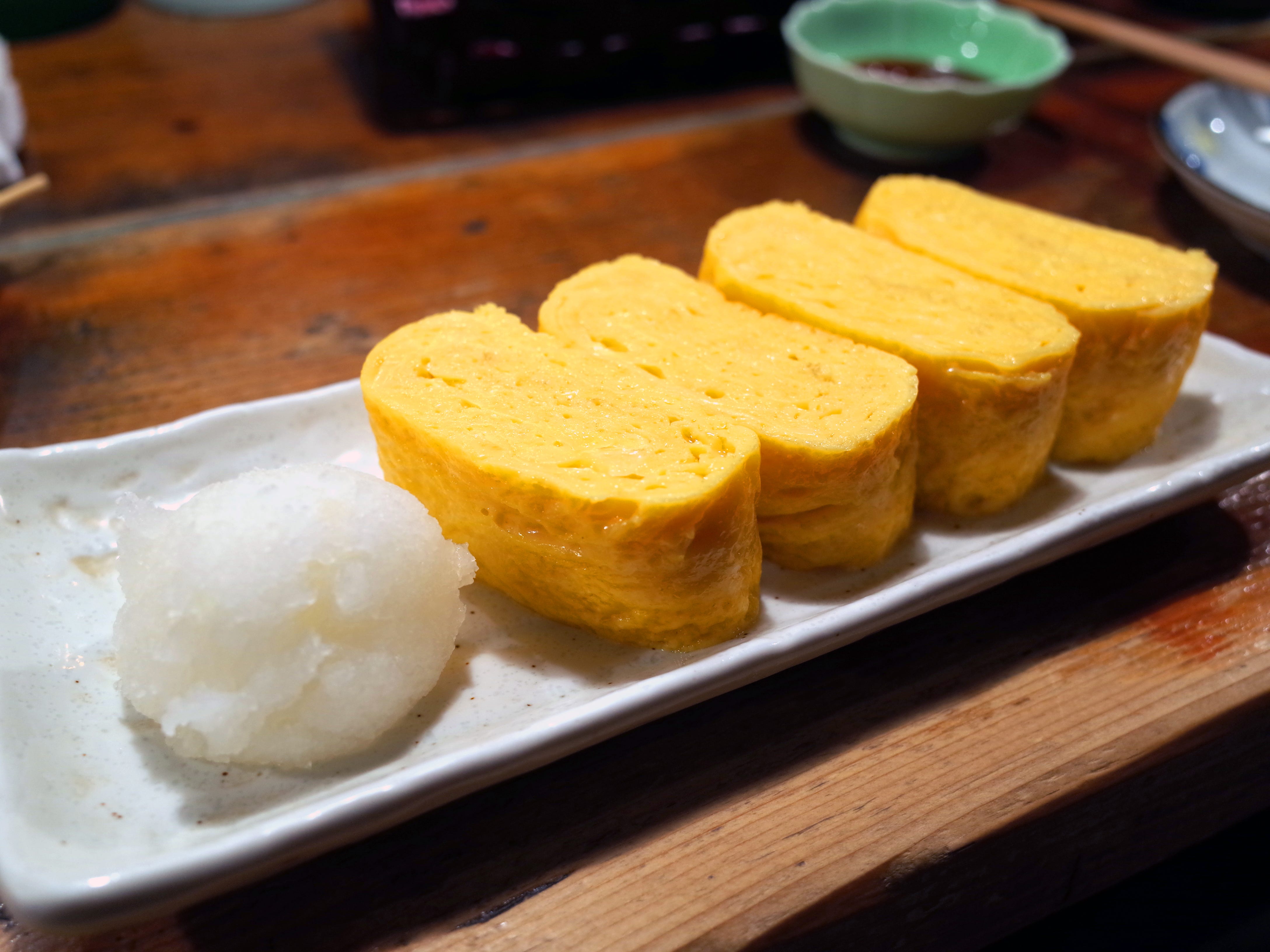

That is the point.
Mastery is built by taking a complex skill, breaking it into parts, working on each one with care, and then reintegrating them into a better whole. Jiro Ono understood this well. His greatness lies in having turned sushi-making into a system. Every repetition, correction, and workday made him better. That is why, for years, many people saw in Jiro the definition of what it means to be a genius.
Today we have a more useful expression for it: deliberate practice.
His mastery was no accident.
What deliberate practice is
Deliberate practice is practice done with attention and method.
Most of us associate improvement with repetition. We believe that if we do something long enough, we will master it. To some extent, that is true—but repetition by itself does not guarantee improvement at all. In fact, the opposite can happen: you may reinforce your mistakes more and more without realizing it.
That is the difference between practice and deliberate practice.
Normal practice is doing something many times.
Deliberate practice is doing it with a method and with a focus on refining technique.
It demands full attention. It demands identifying which part is not working well. It demands correction. It demands measurement. It demands trying again with a higher standard than before. All of this is exhausting; it requires much more from us than repeating something mindlessly.
That is why excellence is so rare: few people are willing to achieve mastery.
When Jiro required an apprentice to master one single part of the process before moving on to the next, he was engaging in deliberate practice. At first, any skill requires concentration. Later, those actions become fluid and less conscious because the brain internalizes the process. As soon as a behavior becomes automatic, we stop looking at it closely—and when we stop looking at it, we stop improving it.
That is why mechanical repetition without attention is the enemy of progress.
It is easy to believe that we are progressing simply because we are accumulating experience. However, experience alone is not enough. Deliberate practice breaks that inertia. It forces us to examine our work with greater precision. It forces us to stop asking, “How much have I done?” and start asking, “What have I improved today?”
Let’s look at this step by step.
Deliberate practice step by step
Deliberate practice follows a simple logic: break down, correct, integrate.
1. Break it down
Deliberate practice begins by narrowing the focus.
When we want to improve at something, we usually practice the whole skill: writing better, speaking better, cooking better, selling better. The problem is that it seems like one single thing, but it actually contains too many parts at once. That makes it hard to detect what is failing.
That is why the first step is to divide it.
You must ask yourself what components that skill contains. Writing, for example, is not just writing: it is organizing ideas, building clear sentences, knowing how to capture attention, ending with force, choosing words well, knowing when to expand and when to be brief, using the right tone...
This matters because you cannot precisely correct what you are doing in a vague or confused way.
Jiro did that for years: he perfected small details and elevated the final result.
2. Practice and correct with attention
Once you identify the components, the next step is to work on them one by one.
That is the key difference from how most people practice. The goal is to practice with full attention on the process and gather as much information as possible from your practice. Then, after each mistake, you adjust based on the data you have collected and try again.
That is how you truly improve.
For example, if you want to write better articles, do not practice by writing articles. Master the introduction so you can hook the reader from the first sentence and present any topic in an engaging way. Learn to write strong titles, or learn how to present any topic within the tight word limits of article writing. Do many drills for each of these skills and analyze the texts of great writers with each of these specific points in mind. Compare, analyze, and repeat again.
This kind of methodology protects you from self-deception.
It does not matter whether you practice many hours or few. The important question is how much you have improved and what new steps you need to take to refine the next set of mistakes. That is how Jiro instructed his apprentice to practice tamago dozens of times.
3. Integrate the improvement and start again
After working on one part, it is time to return it to the whole.
The final goal is to perform better in the complete skill, so if you have improved the opening of a text, you must now apply it in a full article. If you have worked on writing good titles, strong conclusions, and choosing the right narrative tone, bring it all together.
Test it as a whole and measure your current overall performance against your initial level.
From there, it is time to break it down again and work in isolation on both new and old elements that still need refinement. That is how Jiro Ono achieved mastery, just like any great master in a skill, sport, or art.
Mastery is no accident.
The potential we all have
Human beings have a great capacity to improve at almost anything.
We have done so since we first existed as a species. However, there was not always a precise way to do it. As the sciences advanced, discoveries were made. From psychology came the concept of deliberate practice (Ericsson et al., 1993).
It is not comfortable. It requires concentration, patience, measurement, and analysis.
That is why not everyone is willing to achieve mastery in a field.
It is easier to accumulate hours than to demand something from those hours.
It is easier to be busy than to be focused.
It is easier to repeat than to correct.
And yet, those who reach an extraordinary level usually share the same disposition: they are willing to work on the small things, to tolerate discomfort, and to refine their craft for a long time. That is the story of Jiro Ono and so many others.
Mastery is no accident.
Want to learn more? Here are 3 related ideas to go deeper:
✍️ Your turn: If you broke down what you do every day into sub-skills, which small element would have the greatest impact if you perfected it?
💭 Quote of the day: “We went back to work after the Second World War. The great masters used to say that the history of sushi was so long that nothing could be improved anymore. Perhaps they had perfected their craft, but there is always room for improvement. I created sushi dishes that did not exist back then.” — Jiro Ono, Dreams of Sushi.
See you next time! 👋

References 📚
Ericsson, K. A., Krampe, R. T., & Tesch-Römer, C. (1993). The role of deliberate practice in the acquisition of expert performance. Psychological Review, 100(3), 363-406. URL
Gelb, D. (Director). (2011). Jiro dreams of sushi [Documental].
Gracias, Alvaro, esta es un otro articula excelente.
A very informative article. I am now able to correlate linking practice and deliberate practice with many activities in the pharma industry in India. Thanks, Alvaro, for sharing