


Welcome to Mental Garden, a newsletter about creativity, focus, and systems for writing and building projects on the internet. To explore the full library, go here.
The following letter is part of our “Notes from Giants” collection, in which we explore the thoughts and lives of humanity’s greatest minds.
🏷️ Categories: Deliberate practice, Learning.
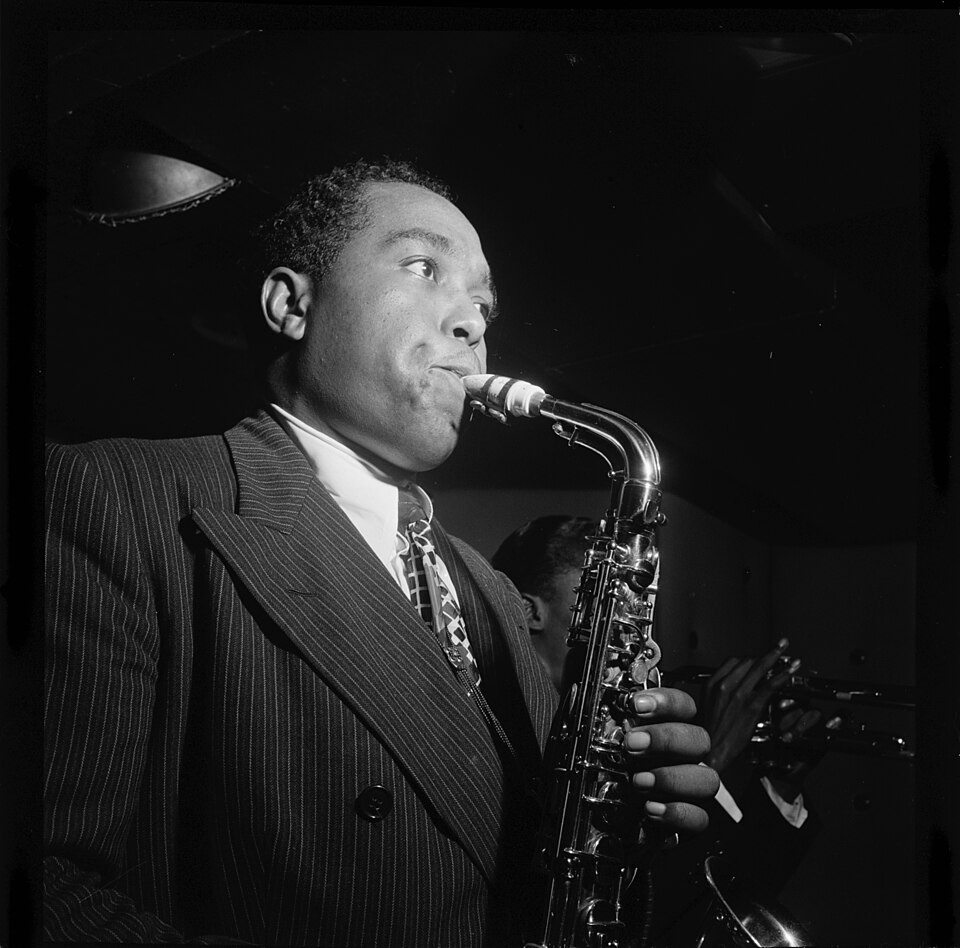
Before the world came to know Charlie Parker, one of the great revolutionaries of jazz, Charlie was just a young saxophonist from Kansas City obsessed with music. Parker would go on to become the leading force behind new subgenres and one of the most influential musicians in the history of jazz, but at the beginning he was nothing more than that: a curious young man with a deep desire to play (Britannica, 2026).
In 1936, one incident marked his career.
Still very young, he went to a jazz session at the Reno Club in Kansas City. He lost the thread, did not know how to continue, and the band’s drummer criticized him for ruining the performance. Parker was booed and stepped off the stage humiliated (Fordham, 2017).
That moment hit him hard, and he never forgot it.
After that humiliation, Charlie stopped studying jazz from a distance. He locked himself away to practice more than 10 hours a day, every day, so he could transfer everything he knew from his mind to his hands, from theory to practice (Vitale, 2023; Reynolds, 2019).
That is the key.
The curiosity was there from the beginning, but the leap came when that interest in learning about jazz turned into demanding, repeated practice sustained over a long period of time. And that is the uncomfortable part of the story we tend to ignore: we often believe that in order to move forward we need to know a little more—another book, course, piece of advice, or guide. And yet Charlie Parker’s story suggests that the biggest obstacle is not a lack of information.
It is a lack of real practice.
Because it is one thing to understand how something works. It is something very different to repeat it enough times to turn that knowledge into skill.
The crucial question is not, “What else do I need to learn?”
It is rather: “What do I need to start practicing?”
Think about it for a moment.
We all have goals we want to achieve. Learn a new language, eat better, lose weight, save more money, build a business, write a book… It is easy to believe the only obstacle is not knowing enough, so we accumulate courses and guides in search of the perfect strategy. Courses on entrepreneurship, guides to losing weight fast, or promises to learn a language in three months.
It seems that if we knew a better strategy, we would get better results.
And yet I am becoming more and more convinced that it does not work that way. In fact, spending so much time learning something new can be a waste of time and resources if your goal is to move forward rather than simply know more.
It all comes down to understanding the difference between learning and practicing.


The difference between learning and practicing
After many stumbles, I realized something.
Learning something new and practicing something new can seem like very similar activities, but their results can be radically different.
When we seriously learn something, we absorb valuable information to improve.
When we seriously practice something, we engage in deliberate practice to improve.
The difference is that only through practice can you turn what you have learned into skill. It was not enough for Charlie Parker to listen to and analyze music more deeply. The big leap came when he started playing, repeating, failing, and adjusting for hours, day after day.
Think about it: this happens to us in every area.
If your goal is to learn to speak in public, you can read about techniques for controlling your nerves and structuring a speech, but the only way to gain ease is to practice speaking in front of other people.
If your goal is to play the piano well, you can study music theory and watch videos about hand position, but the only real way to improve is to practice scales, make mistakes, and repeat the same things every day.
If your goal is to learn how to ride a bicycle, you can read about how to keep your balance, how to brake, and about posture, but the only way to do it well and stop falling is to practice by getting on the bike. When I was little, I was terrified of falling off my bicycle, but I learned that there are things you can only truly learn once you do them yourself through practice.
Passive learning creates knowledge.
Active practice creates skill.
Practice versus learning
Let’s look at 3 reasons to prioritize active practice over passive learning.
1. Learning is the comfort zone
Learning can be a way of “moving forward” without taking on the risk of failure.
For example, imagine you want to speak a new language. Reading a book about “the best method” makes you feel as though you have already made progress (“now I know the best way”), but in reality you have not spoken a single word in that language. Then the justification appears: “I am preparing myself so I can do it well.” And yet many times those answers only appear once you begin to act.
That is exactly what happened to me with Mandarin Chinese.
About five years ago, I started studying Chinese. During the first year, I focused on learning: I only used textbooks. The truth is, I did make progress, but only a little. It was not until I started practicing that my level truly took off. And, interestingly, by speaking and making mistakes I learned faster than sitting in front of a book.
Learning is valuable… until it becomes a refuge to avoid practicing and failing.
2. Practice brings you closer to the result
Many times we think about results, but ignore processes.
We all like shiny results: speaking a language fluently, being fit, having published a book, completing a project. The point is that much of the distance between where we are now and that final point is covered through practice.
We never get there just by thinking about the goal.
We get there through daily practice.
For example, imagine you want to write a newsletter on Substack. Thinking about the kind of content you would like to write and the design you will give your profile may motivate you for a while, but it does not change much. What actually makes you a better writer is sitting down to write today, then coming back tomorrow and the day after for months. The result does not appear all at once; it is built within the process.
That is where the importance of practicing, and not just learning, lies.
If I had waited until I had everything clear before I started writing on Substack, I would probably still be going back and forth over the name of the newsletter…
3. Practicing gives you your own judgment
Learning gives you information, but practicing teaches you how to use it.
For example, imagine you want to start a business. You can take sales courses, read about strategy, or study how to present your product. All of that may help you understand the path better, but it does not truly teach you how to walk it. The only way to discover what works in your specific case is to talk to customers, make offers, make mistakes, and adjust as you go.
That is where nuances that were not in the theory begin to reveal themselves, and you start to develop your own judgment.
That is what makes practice so powerful.
So what should we do?
Does this mean that only practice matters? No.
Learning can help you make better decisions, anticipate problems, and take better paths from the start. The problem is that learning, on its own, does not take you anywhere. And often we hide behind information because today all information is one second away on the internet.
We spend too much time consuming information and too little applying it.
Progress does not come from reading about how to make progress.
It comes from acting.
Want to learn more? Here are 3 related ideas to go deeper:
The lesson of the wise Zhuang Zi for mastering any skill in life
How to master any skill, according to the greatest sushi chef in history
✍️ Your turn: What is the smallest concrete action you could repeat today to start practicing instead of just learning?
💭 Quote of the day: “Our potential is one thing. What we do with it is quite another.” — Angela Duckworth, Grit
See you next time! 👋

References 📚
Britannica Editors (2026). Charlie Parker. Encyclopedia Britannica. URL
Fordham, J. (2017). A teenage Charlie Parker has a cymbal thrown at him. The Guardian. URL
Reynolds, B. (2019). Paul Desmond interviews Charlie Parker (1954). Bob Reynolds. URL
Vitale, T. (2023). The Birth of Bird: Young Charlie Parker found focus, faith in music. Jazz24. URL
Thank you! This is exactly what I needed to hear this morning. Now where's that favorite pen...? 😊
Dude I really needed to hear this re learning Spanish. I was definitely at a crossroads. Thank you!