


Welcome to Mental Garden. The following letter is part of our "Notes on giants" collection, in which we explore the thoughts of humanity's greatest minds.
To see the full library, click here.
🏷️ Categories: History, Literature, Life lessons, Motivation.
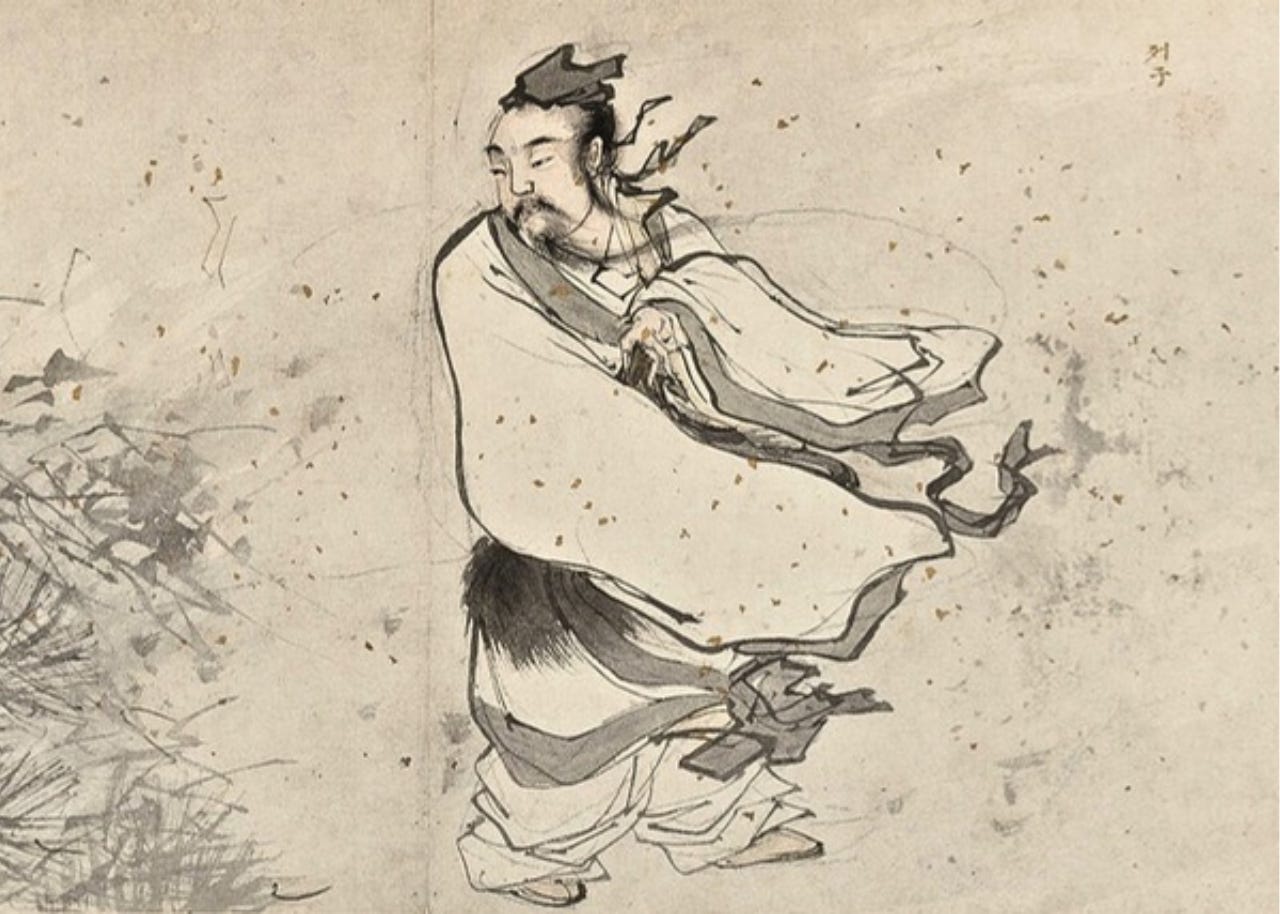
More than 2,000 years ago, the Chinese philosopher Lie Yukou compiled in his work Liezi a series of stories and parables that conveyed Taoist wisdom.
Stories about nature, patience, the relationship between human beings and the world, and how willpower can shape what seems unmovable. In one of its chapters, “Tang Wen,” I found a brilliant fable that has been told for centuries in Chinese culture, now known as Yu Gong Yi Shan (愚公移山): The Old Man Who Moved Mountains.
A story that appears naive at first glance, yet contains one of the most powerful lessons on long-term vision and the enormous impact of discipline.
In China, it’s used to praise those who persist in their goals despite difficulties.
Here begins an ancient story…
A long time ago, in a remote corner of China, lived the old man Yu Gong.
He was nearly ninety years old, and his house stood right at the foot of two colossal mountains: Taihang and Wangwu. They were so big that they blocked the road to the south, forcing his family to take endless detours whenever they wanted to trade or visit other villages.
One day, Yu Gong gathered his family and pointed at the mountains.
“These rocks steal our time and strength,” he said. “If we work together, we can remove them and open a direct path.”His wife frowned.
“How will you move two such massive mountains? Where will you put all that earth?”Yu Gong pointed toward the horizon.
“We will take it to the sea. And if we don’t finish, our children will continue. And our children’s children. One day, they will be gone.”And so they began. Day after day.
Digging. Carrying. Walking to the sea. Returning. Repeating tirelessly.A neighbor, Zhi Sou, watched them from his house and laughed.
“How foolish you are!” he shouted. “You’ll never manage it. You’re old and weak, and time is not on your side—you’re counting your last days.”Yu Gong didn’t raise his voice.
“The mountain won’t grow. Our family will. How could we not succeed one day?”The story says the gods, moved by his determination, sent two giants down from the heavens who moved the mountains away and cleared the path.
Zhi Sou was left speechless.
And the road, open.

What’s your mountain?
We all have one. It’s not made of stone, but it’s just as heavy.
Maybe it’s that book you promised yourself you’d write one day. Maybe it’s that newsletter you picture with thousands of subscribers but never actually start. Maybe it’s that uncomfortable decision you keep postponing, waiting for the “right moment” that never seems to arrive. Maybe it’s that healthy habit that could change your life but is hard to keep, and you abandon it by week three when you see no results.
The mountain is there. Every day.
And like Zhi Sou, there will always be someone telling you it’s not worth it. In fact, most of the time, that voice doesn’t come from outside—it lives inside us, tirelessly repeating that we won’t make it, that it’s better to give up, or not even try.
But there’s an unavoidable truth…
The mountain won’t move on its own
The biggest danger is waiting for things to change one day, out of nowhere.
For a stroke of luck, a connection, or an opportunity to fall from the sky and put everything in order without effort. Sadly, that almost never happens. That’s why Yu Gong didn’t wait, didn’t negotiate with the mountain, didn’t look for shortcuts. His old age had already taught him the lesson—there are no shortcuts to crossing the mountain.
The real shortcut was to grab the shovel and start today. Not tomorrow.
It’s the same with writing.
Starting to write is hard—it’s the weight of moving the first stone when you haven’t yet trained your muscles. Luckily, over time, your old texts will push you to write more and better. Likewise, starting to get known from zero is hard, but the more you write, the more likely it is people will start discovering you. Mistakes work the same way—thanks to early mistakes, you’ll know how to move the rest of the mountain more effectively.
But none of that happens if you leave the shovel on the ground.
The same principle you apply to writing, you can apply to a thousand other fields.
The daily shovel
There’s an idea that keeps chasing me: the daily shovel.
If you look at extraordinary people in any field, you rarely see epic days that make them different from everyone else. In reality, it’s steady, cumulative routines that bear fruit in the long run. This mental model of the daily shovel is a way of making a years-long plan or project tangible.
500 words a day → one post every two days.
One post every two days → 182 posts a year.
One idea shared every day → 365 touchpoints with readers a year.
There are no more secrets to moving mountains.
Small shovelfuls don’t impress anyone, but like Yu Gong, the goal of your project is not to impress—it’s to move your mountain. The decision to move one small stone today takes almost no effort, but sticking to that decision does.
The hard part is not moving little stones.
The hard part is coming back every day with your shovel.
It’s a matter of consistency, not strength. And that’s a difference we often overlook.
Those who watch you carrying stones
Outside, Zhi Sou watches with very little faith in you.
He’s sure you won’t make it and counts your failures to confirm his belief. Until one day, for some reason he can’t understand, something changes. You get that message, that opportunity comes along, or a reader who started with you from zero now shares your work with their network. An old blog post suddenly starts getting daily visits because someone found it and recommended it.
Zhi Sou doesn’t believe in you, doesn’t acknowledge your merit.
But you know the truth—you’d already been moving the mountain for years. And if the “miracle” appeared, it was because you were already moving stones.
The eternal lesson
The fable of Yu Gong has survived two millennia and is still just as valuable.
A story that became a motto, used by the Chinese to describe those who, with discipline, take on challenges that seem impossible. A story of invisible, repetitive, humble work.
There are no shortcuts to crossing the mountain.
The great milestones are built on the same principle: shovelful after shovelful.

Still curious? Here’s a selection of 3 related key ideas:
✍️ Your turn: If you started today with one daily shovelful, what would your project look like in a year?
💭 Quote of the day: “Those who are attracted to the outside world are always looking for something new and wonderful to satisfy their senses. Yet only those who look within themselves will find true satisfaction.” — Lie Yukou, Lie Zi
See you next time! 👋

References 📚
Lie Yukou, Liezi.
This landed at exactly the right time. My “mountains” aren’t made of stone but of generational patterns — in parenting, career, and the quiet ways we’re taught to mistake endurance for love. Some days I can’t tell if they’ve shifted at all; the work is slow, invisible, and the fear is that I’ll leave this world before the shape of my own life changes. But like Yu Gong answering the neighbour’s mockery, I know the mountains cannot grow any higher, and the work will outlive me. In my daughter’s life, I already see the skyline changing — proof enough to keep moving the stones.
Thank you 🪷