

Why store music makes you spend more (and you don't even realize it)
86% are unaware

🏷️ Categories: Decision making and biases.
Have you ever paid attention to the music playing in the stores you visit?
The music isn’t random…
It’s not the same in a grocery store as in an elegant clothing shop or a cozy café. Each place seems to have its own soundtrack, designed to accompany whatever you’re doing there.
And that’s exactly the point—to increase sales or service use.
Interestingly, if someone asked you whether the music influenced your decision, you’d say no.
But the data says otherwise.
Today we’re going to talk about something fascinating: how the environment—through cues as subtle as music—can nudge us into making decisions without us even noticing. You’ll see how a simple melody can completely change your perspective.
And we’ll do it through scientific studies that will leave you thinking...

Music and wine
Some psychologists conducted a brilliant experiment in a supermarket.
They placed French and German wines on a shelf, matched by price and type. They added small flags to reinforce each wine’s origin. Over two weeks, they alternated between French accordion music and traditional German beer-hall music.
The result?
With French music, 77% of sales were French wine.
With German music, 73% of sales were German wine.
Yes, the music drastically changed people’s decision-making.
And best of all: 86% of customers denied that the music had influenced their choice. They admitted they heard it and that it made them think of France or Germany, but they didn’t believe it affected their decision.
This is a perfect example of priming.
That is, the unintentional activation of ideas or behaviors triggered by context. French music activates ideas about France; German music activates ideas about Germany.
And those ideas predispose your choice—but there’s more…
Associative mind
Our brain works through associations.
If you read the word “treasure,” you’ll feel something positive and pleasant images will come to mind. If you read the word “spider,” you’ll probably feel the opposite. And if you see images of treasures or spiders, the priming effect becomes even stronger. Whenever someone introduces a cue (a word, smell, sound…), our mind starts a chain of associations that can lead us toward their intended outcomes (Mauboussin, 2009).
And all of this happens without us being aware.
There are plenty of examples:
Exposing people to words related to old age made them walk 13% slower (Mauboussin, 2009).
The smell of a multi-purpose cleaner led people to keep their surroundings tidier, simply due to the association with cleanliness (Mauboussin, 2009).
On a sofa retailer’s website, background images of clouds or coins shifted preferences toward either comfortable/affordable sofas or toward more refined and elegant ones (Mauboussin, 2009).
That’s the power of priming: it influences people while going completely unnoticed.
No design choice is accidental—not even the music or scent in a store.
Music, time, and money
Choosing the right music for your business can earn you more money.
Psychologist Ronald Milliman studied how the tempo of music influenced shoppers. When the music was slow, customers walked more slowly and spent 38% more on average. With fast music, people moved quickly and bought less (Milliman, 1982).
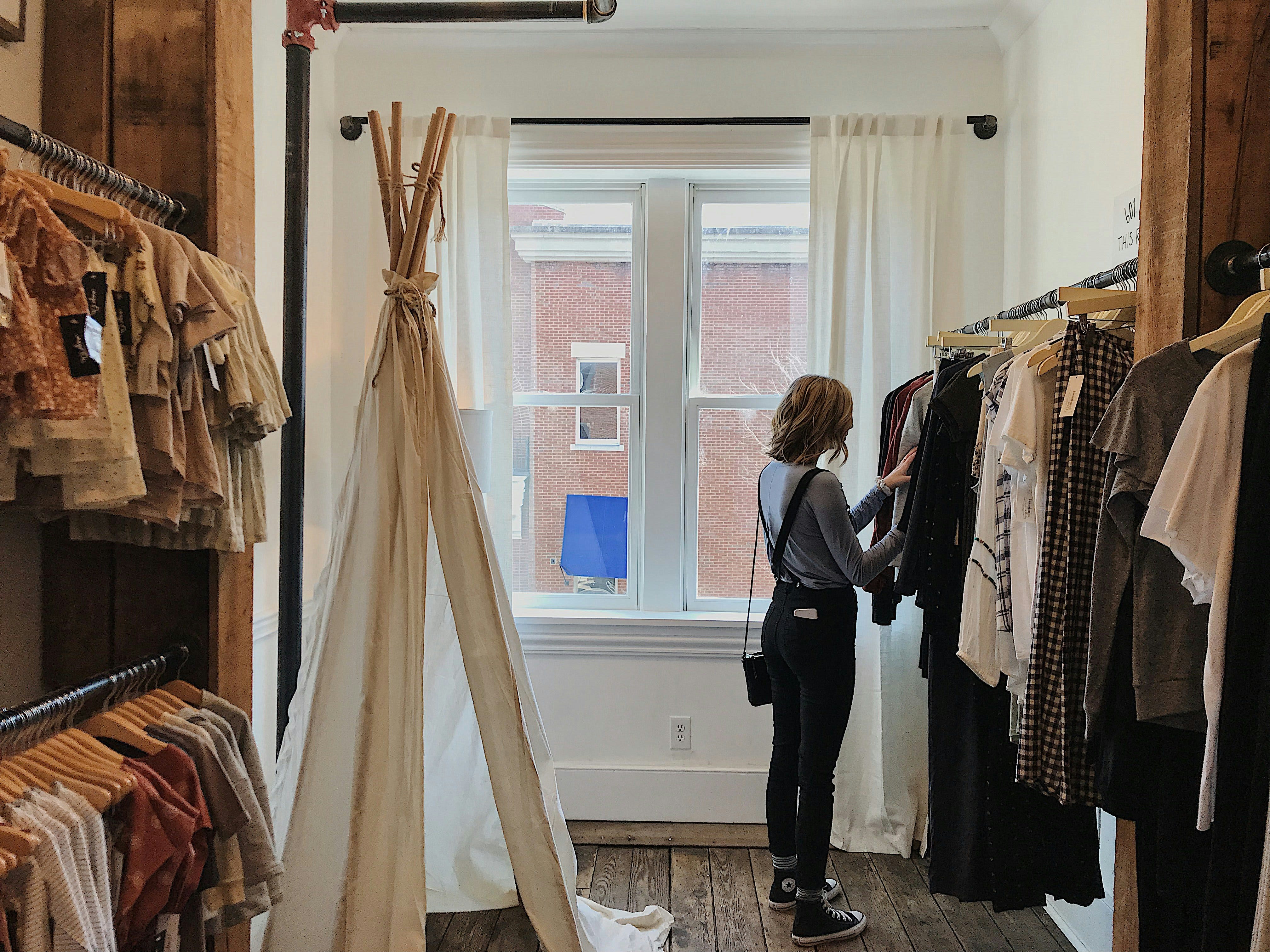
Pay attention to the music in clothing stores and everything will make sense.
Music increases the time spent in-store and the money spent, but the target audience matters: women felt better with slower, softer music than men. Age also influenced preferences in terms of genre and tempo. With this in mind, companies choose strategically to influence you (Andersson et al., 2012).
Conclusion?
Music influences you without you being truly aware of it.
So… are we puppets of our environment?
Not entirely, but we’re not as rational as we think either.
Michael Mauboussin, in Think Twice, explains that making good decisions requires knowledge and effort, but this is exhausting, so we usually let our “autopilot” (System 1) handle most daily decisions. It saves energy but also makes us very easy to influence.
If you want to decide better and not just go with the flow, here’s an essential selection:
Each one explores concrete techniques to think more clearly, reduce bias, and make decisions with more intention. They’re worth reading if you want to switch from automatic mode to a more strategic one.
That’s all for today.
Enjoy the music in stores—but not too much 🎵🎵.
✍️ Your turn: If something as simple as store music can change which bottle of wine you choose… what impact might digital environments be having, where we spend hours every day? Notifications, button colors, “for you” recommendations… Everything is designed to guide you.
💭 Quote of the day: “Without music, life would be colorless.” — Jane Austen, Emma.
See you next time! 👋

References 📚
Andersson, P. K., Kristensson, P., Wästlund, E., & Gustafsson, A. (2012). Let the music play or not: The influence of background music on consumer behavior. Journal Of Retailing And Consumer Services, 19(6), 553-560. URL
Mauboussin, M. J. (2009). Think twice: Harnessing the Power of Counterintuition.
Milliman, R. E. (1982). Using Background Music to Affect the Behavior of Supermarket Shoppers. Journal Of Marketing, 46(3), 86. URL