


Welcome to Mental Garden, a newsletter about creativity, focus, and systems for writing and building projects on the internet. To explore the full library, go here.
🏷️ Categories: Life lessons, Motivation.
It was 1960.
The Civil Rights Movement in the United States was at a critical point.
Equality was no longer a distant idea; it was a daily, visible struggle in schools, streets, courtrooms, and inside homes across the country. In the middle of the storm, a six-year-old girl named Ruby Bridges left home to go to school like any student would on a normal day, but this would not be a normal day.
Ruby attended an elementary school in New Orleans.
Ruby was the first Black girl to attend William Frantz Elementary School, which until then had been reserved for white students. Every day she entered the building escorted by police officers while a crowd shouted outside (Asmelash, 2020).
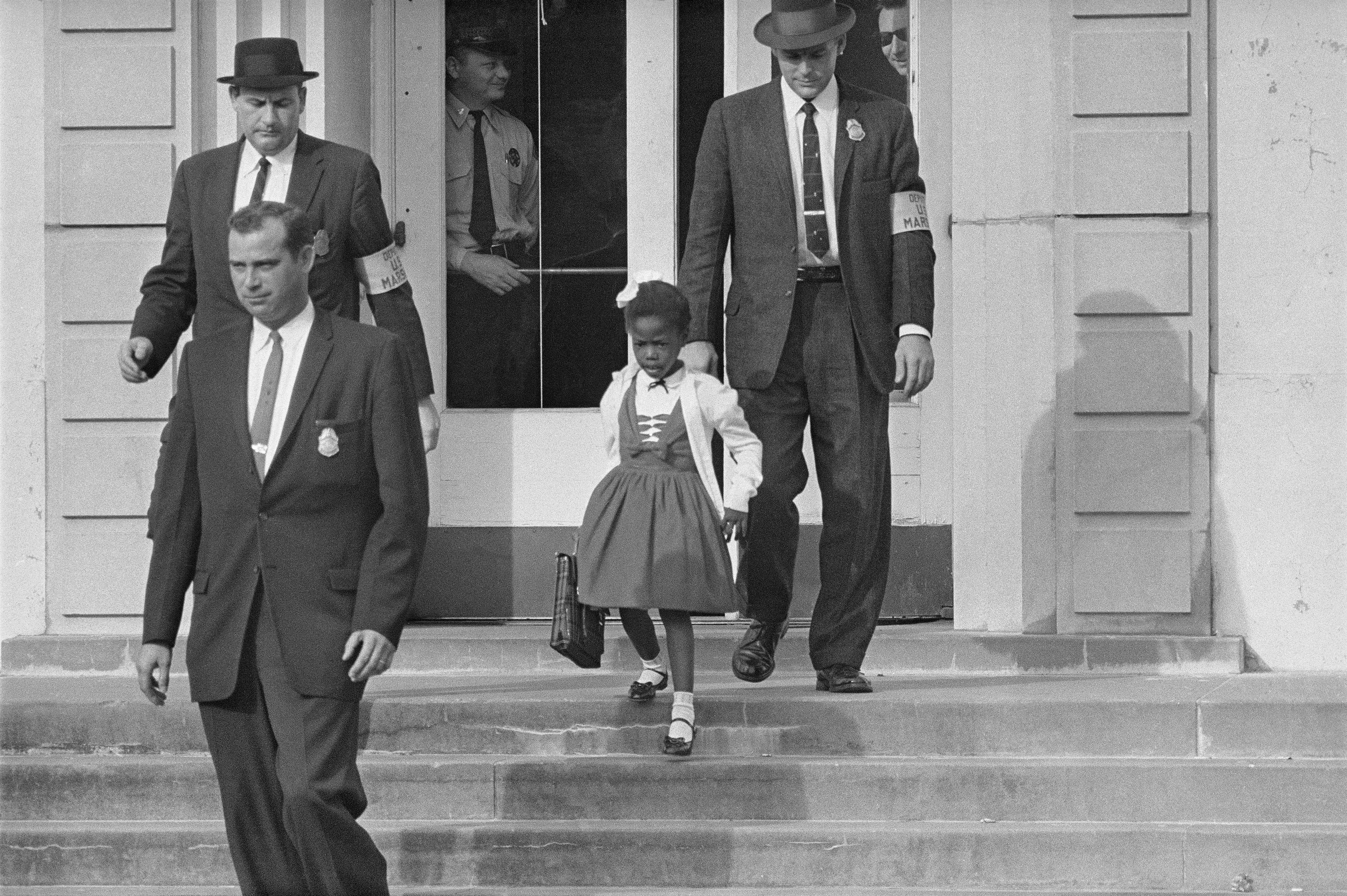

There is something deeply moving about that.
At six years old, Ruby did not understand the weight of her steps. She was not thinking about changing the country; she was just a girl walking to her desk to learn. Perhaps she was only wondering why there was so much uproar over going to class like the rest of the students (Bridges, 2009).
And yet, her innocent steps meant so much.
Her presence inside that building made visible something that thousands of people had been protesting for years: the possibility of real equality in something as simple as walking through a door and taking a seat that should never have been denied in the first place.
We usually imagine historic change as a great, dramatic revolution.
But that is not always how it happens.
Ruby’s life became a symbol of the Civil Rights Movement. For entire generations, she came to represent the cost of progress and the advance of justice.
Sometimes the extraordinary is nothing more than insisting on the ordinary.

Ordinary for you, extraordinary for others
Perhaps one of the most moving things about Ruby Bridges’ story is that her impact was immense, even if at the time it could not be fully measured.
And that says something important about our own lives too.
If you think long enough about almost any role you have had to play in life, you can find reasons to consider it forgettable or insignificant.
Your contribution to a project may seem like very little.
Your presence may feel like one among many.
Your work may not seem especially brilliant.
But the truth is that we do not always see the full reach of what we do.
What feels like routine to you may be a work of art to someone else.
What feels like “just doing your job” to you may be an inspiring image to someone else.
What feels like a small gesture to you may change another person’s life.
What seems obvious to you may be astonishing to someone else.
I am sure this happens to you in some area of your life: people value you for something that you do not even value in yourself.
And that thing we overlook is our great potential.
Bring out your potential
“I know I’m not going to be able to change the world, but I think it’s important to try to make a difference.” — Nicholas Sparks, The Longest Ride
We all play roles in life.
Some receive more attention than others. They are applauded, publicly recognized, and made to feel important. Others are not. But that does not make them any less meaningful. Anyone can be a role model because of their values, their skill in a certain area, or their actions. Something you may do without much enthusiasm may touch the hearts and minds of other people far more than we imagine.
When I write, I sometimes receive comments like:
Álvaro, your latest article inspired me to change.
These words reached me at just the right moment.
I started this idea thanks to you.
This message brought me relief.
It is wonderful. Just knowing that it helped one person is enough for me.
This is everywhere, even though we often fail to give it the recognition it deserves. There are people who turn their everyday work into a work of art.
There are teachers in modest schools who shape their students’ lives.
There are bakers who devote their nights to work so that others wake up to a morning already prepared.
There are drivers who travel halfway around the world so your package arrives on time and you can pick it up in your pajamas.
There are farmers who work themselves to the bone every day so others can eat.
There are street sweepers who sustain the functioning of an entire city.
There are unrecognized artists who create beauty for a few.
It is never only about what you do.
It is about how you do it.
Most of us will not end up in history books. It is unlikely that our work will shape a social movement or symbolize an era, but that does not mean our lives do not matter or will be forgotten.
We can all offer what we have. We can all bring out our potential.
And that is enough to feel that life was worth it.
Want to know more? Here are 3 related ideas to go deeper:
Mottainai: The lesson of a legendary samurai on valuing what you have
If it were your last day: What you would change when you remember time is running out
✍️ Your turn: When was the last time someone valued something about you that you did not consider important? What did they value in you?
💭 Quote of the day: Racism is an adult disease, and we must stop using our children to spread it. — Ruby Bridges in a speech in 2002 (URL)
See you next time! 👋

References 📚
Asmelash, L. (2020). 60 years ago today, 6-year-old Ruby Bridges walked to school and showed how even first graders can be trailblazers. CNN. URL
Bridges, R. (2009). Ruby Bridges Goes to School: My True Story.
Loved this, Alvaro. So true. We all have more influence within our circles than we realized. That's why it's called a sphere of influence.
La soberanía biográfica y social se construye con cada paso firme que damos hacia nuestra propia verdad porque al final la historia de Ruby Bridges nos recuerda que el vigor de lo cotidiano es la herramienta más poderosa para desmantelar las distorsiones de la injusticia.
Qué buen análisis haces sobre la paradoja de la rutina porque al final entender que tus pasos ordinarios pueden ser extraordinarios para otros es el acto de Autonomía más inspirador que existe. Me encanta la forma de ver las cosas que comentas al rescatar la sencillez de Ruby frente al peso histórico de su acción ya que la verdadera Independencia no siempre nace de una gran revolución gritada, sino de la insistencia en ejercer el derecho a estar presente. Al final.... caminar hacia un pupitre escoltada por federales no era solo ir a clase, era un ejercicio de soberanía biológica que reclamaba un espacio negado.
Hablando de ese contexto histórico que mencionas, las estadísticas de la época reflejan la magnitud del desafío. En 1960, cuando Ruby entró en esa escuela, la segregación era la norma estructural: en los estados del Sur, menos del 0.1% de los estudiantes negros asistían a escuelas con estudiantes blancos. El impacto de su rutina fue tal que, para 1964, tras la Ley de Derechos Civiles, la matriculación integrada empezó a subir, aunque el camino fue lento. En la actualidad, el panorama ha cambiado pero persisten retos: según datos del NCES, aproximadamente el 45% de los estudiantes negros en EE. UU. asisten a escuelas donde la mayoría de los alumnos son de minorías, lo que demuestra que la lucha por esa "rutina igualitaria" que Ruby inició sigue requiriendo nuestro vigor y atención.
Esa capacidad de convertir el trabajo diario en una obra de arte es pura Soberanía. En Salud Leona defendemos que el vigor y la salud integral se alimentan de sentir que nuestras acciones tienen sentido y propósito porque la Autonomía psicológica se fortalece cuando dejamos de vernos como piezas insignificantes y nos reconocemos como modelos de valores. Mantenerse constante en lo que haces, ya seas panadero, profesor o escritor, es lo que te otorga la Independencia de salud y de ánimo para influir positivamente en tu entorno.
Estamos escribiendo un libro en tiempo real sobre cómo blindar ese Vigor y esa Soberanía para que nunca infravalores el alcance de tus pasos. Te animo de verdad a que te unas a nuestra manada suscribiéndote porque tu mirada sobre el potencial oculto y la importancia del "cómo" hacemos las cosas es el tipo de Independencia de criterio que celebramos aquí. Me encantaría que nos enviaras un artículo tuyo para leer cómo tus sistemas de escritura han influido en tu propia Autonomía de pensamiento y en la energía con la que construyes tus proyectos. ¿Crees que reconocer el valor de nuestra propia rutina es el primer paso para alcanzar una Soberanía real sobre nuestro impacto en el mundo?
Seguimos. 🦁🔥