

Christmas wasn't always like this
How a party of noise and rebellion ended up domesticated

Welcome to Mental Garden. The following letter is part of our “Distilling Books” collection, in which we extract the most revealing ideas from literature. For the complete library, click here.
🏷️ Categories: History, Social relationships.
Christmas was not always a warm, kind, family-centered celebration.
For centuries, it was quite the opposite.
What we now associate with home-cooked dinners and children eagerly awaiting gifts was once a festival of noise, excess, disorder, and the deliberate suspension of social order, as Stephen Nissenbaum writes in The Battle for Christmas. A winter carnival in which almost anything went. And understanding this is not just a matter of historical curiosity: it is a key clue to understanding how societies use festivals to balance their internal tensions.
Here comes a far more chaotic and fascinating story of this legendary holiday.

1. Christmas as Carnival
Christmas was born as an inversion of the social order.
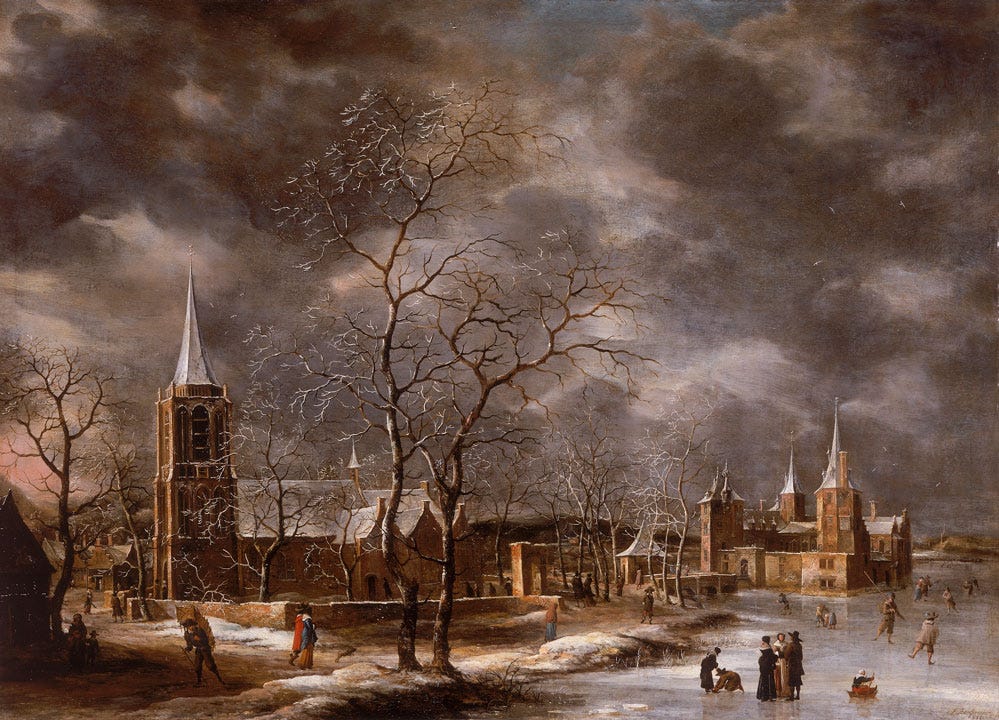
In its European origins, especially between the 16th and 18th centuries, Christmas was a period of ritualized excess, year after year. Eating until bursting, drinking without restraint, mocking authority, and breaking rules became the norm. It was a “winter carnival,” a pressure valve in societies marked by constant scarcity, hard physical labor, and rigid hierarchies where it was very difficult to get ahead.
It was a public celebration with processions, bands, collective drunkenness, mockery of authorities, and even records of invasions of wealthy homes.
The world was turned upside down for a few days so it could remain standing the rest of the year.
But all of this had a purpose…
In the agricultural societies of Northern Europe, December marked the end of the productive cycle. The harvest had been gathered, animals had already been slaughtered, and beer and wine had finished fermenting. It was the only time of year with fresh meat, available alcohol, and free time.
What would you do in that situation?
Celebrate.
The scarcity of the rest of the year explains the explosion of joy that Christmas represented. It was something biological, tied to the natural cycles of harvests. That is why it is key to understand that the date itself was not sacred. As Stephen Nissenbaum points out, this date had no clear biblical or religious basis; it was chosen by the Church in the 4th century because it coincided with the winter solstice, already celebrated by pagans.
Christian Christmas was a religious veneer over much older rituals.
The “Christian” tradition was born from pagan origins, which is why it initially generated strong rejection among more puritan Christians themselves. In colonial America, in New England, Christmas was banned. Between 1659 and 1681, celebrating it in Massachusetts was illegal. Puritans saw nothing Christian in it—only excess, moral disorder, and an ode to the squandering of an entire year’s labor.
It was not a family holiday: it was public and difficult to control. That is why it was persecuted.
And yet, it endured.
2. When the Party Left the Street and Entered the Home
For centuries, Christmas was not celebrated in the living room.
This disorder and excess had a clear social function when the population was rural. As you’ve seen, it was the only time of abundance in the entire year, and the wild celebration was a small luxury after a year of labor.
The chaos had invisible limits and served to release tensions.
But that balance broke.
With the arrival of industrial capitalism, work stopped following natural cycles. For many, December was no longer a time of rest. Industrial production had no such rhythms, and Christmas ceased to be synonymous with abundance.
The holiday no longer released tension. People were still exhausted, but now without a safety valve.
At the beginning of the 19th century, that tension exploded.
A striking example is the year 1828, which was brutal: in New York, gangs of young workers roamed wealthy neighborhoods smashing windows, breaking into houses, looting shops, and attacking churches and public spaces.
What had once been controlled chaos became dangerous for the ruling elites.
Christmas was no longer tolerable for those in power—it was now a threat.
And that is where its definitive transformation began.
3. Santa Claus as a Cultural Solution
The response of the ruling classes was clever.
Figures like John Pintard promoted a radical change: take Christmas off the streets and bring it into the home, thus preventing the gathering of large crowds. By turning it into a private celebration, the focus shifted from the community to the family unit.
And within the family, to children—more peaceful still.
In this process, a new central figure appeared.
Santa Claus.
As Stephen Nissenbaum explains, this mythical figure is not an ancient character transferred intact from Europe. It is a modern cultural invention, designed to embody values of peace and good behavior—the opposite of Christmas’s origins.
He demanded good behavior… and in return promised gifts.
Once again, a brilliant move.
Gifts were not born from selfless love. They were a cultural tool to channel excess. Where there had once been an abundance of food, alcohol, and social disorder among peasants, there was now abundance within the domestic sphere, created by industrial workers who spent more than at any other time of year to celebrate family reunions after a year of hard work.
The energy of the holiday never disappeared—it was simply redirected.
And so we arrive at the present. A season that seems to start earlier every year, beginning as soon as Halloween ends (another holiday worth analyzing). Christmas campaigns begin, everyone trying to claim their share of profit. Constant pressure to buy gifts, now intensified by the new ritual of “Black Friday.” A spending ritual disguised as tradition. A date designed to sell you nostalgia, guilt over what you didn’t accomplish during the year, and a manufactured sense of belonging.
Before, Christmas spoke of scarcity and survival in the face of winter.
Today, it speaks of consumption and nostalgia.
A drastic shift that helps us understand something crucial: traditions and culture do not arise out of nowhere. They are social responses to concrete problems.
And if they were created… they can also be rethought.
Merry Christmas, however you choose to celebrate it.
✍️ Your turn: Do you celebrate Christmas? How do you do it?
💭 Quote of the day: “During Christmas, those at the bottom of society behaved arrogantly. Men could dress as women, and women could dress (and act) as men. The young could imitate and mock their elders (for example, a boy could be chosen as ‘bishop’ and assume, for a brief period, part of the authority of a real bishop). A peasant could become the ‘Lord’ and imitate the authority of a true ‘gentleman.’ In fact, to this day, in the British army, on December 25th officers are required to serve enlisted soldiers at meals.”
— Stephen Nissenbaum, The Battle for Christmas
See you in the next letter! 👋

References 📚
Nissenbaum, S. (2010). The Battle for Christmas.
A great insight. Disturbingly, some of the descriptions of the old Christmas are now reflected again in society - but now all year long.
Fascinating breakdown of how social pressures create safety valves that later get commodified. The shift from public chaos to private consumption wasn't just about controlling disorder but also about redirecting economic activity into profitable channels that the emerging industrial system could capture. Once labor became decoupled from agricultural rhythms, the old festival lost its functional purpose but the spending didnt disappear it just got funneled into retail. This whole evolution shows how cultural forms persist even when their original context collapses, they just morph into whatever serves current power dynamics.