

Your memories are not reality
How the stories you repeat shape reality

Welcome to Mental Garden, a newsletter about creativity, focus, and systems for writing and building projects on the internet. To explore the full library, go here.
🏷️ Categories: Memory, Decision making and biases.
In 1974, one of the most striking experiments in psychology was conducted.
Elizabeth Loftus and John Palmer studied the relationship between memory and language. To investigate the issue, they designed a simple experiment, but with an incredible result. They showed different participants footage of car accidents and then asked them questions about what they had seen.
So far, nothing surprising.
What was interesting was this: a single word in the question changed the way people remembered the accident. When they were asked how fast the cars were going when they “smashed” into each other, they gave higher estimates than when the question used softer verbs, such as “hit.”
And there was something even more remarkable.
A week later, the participants were asked whether they had seen broken glass in the footage. There was no broken glass in the footage. Even so, those who had previously received the more intense version of the question with “smashed” were more likely to say yes, they had seen broken glass.
In other words, people did not remember what had happened.
They reconstructed the memory based on the words that were used.
Loftus and Palmer’s research helped clearly show something vital: our expectations, interpretations, and the language we use when speaking with others and with ourselves can change how we remember and see reality.
But why does this happen? And how can it affect our lives?
Here is the key to using it in your favor…

The power of mental schemas
In psychological terms, a useful way to understand this phenomenon is through schemas. A schema is a set of prior ideas that your brain uses to perceive, organize, and interpret new information.
We form schemas from our life experiences.
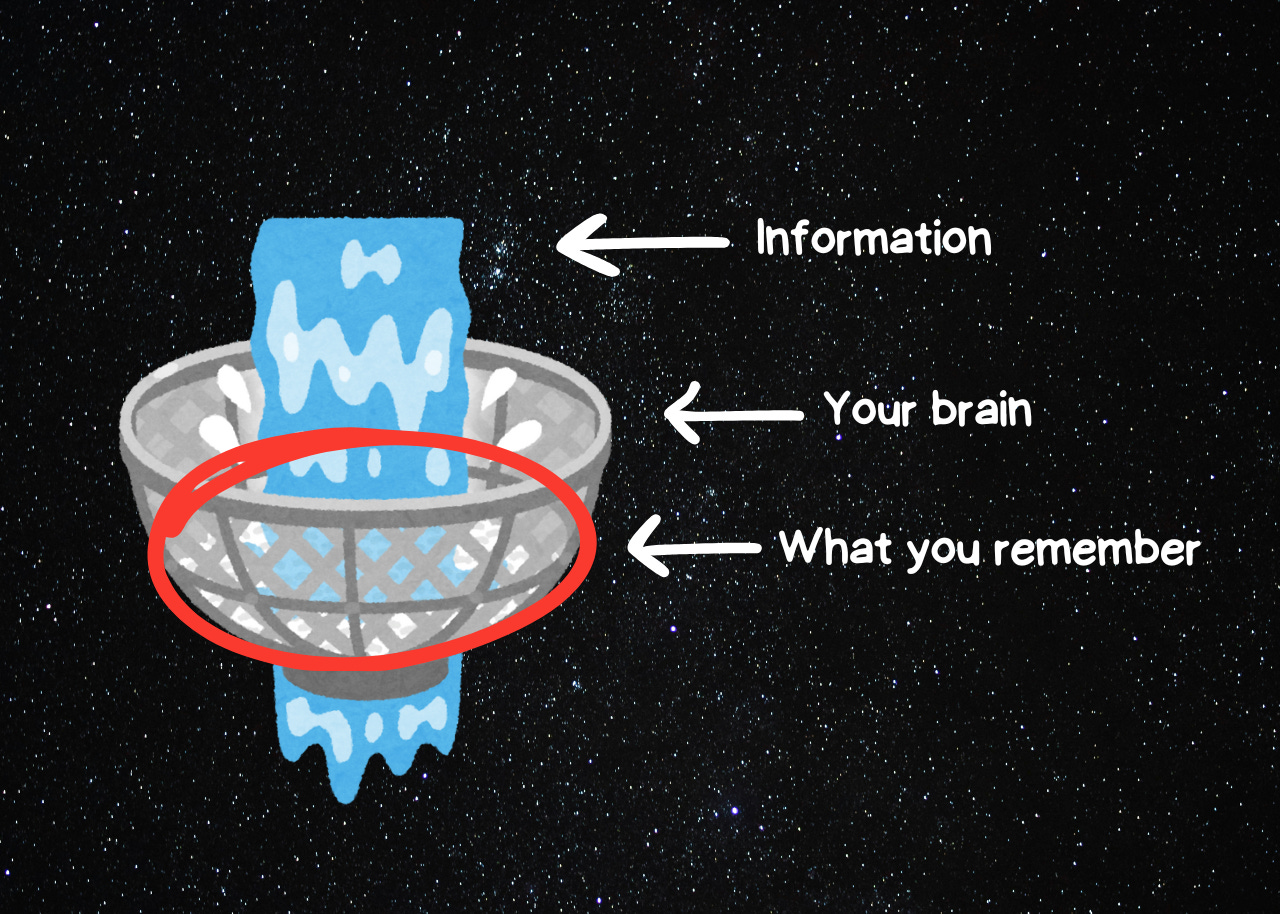
Once these schemas are formed, they tend to persist even when reality changes or when new information appears that does not fully fit with them. It is the brain’s simple and quick way of filtering new information and understanding the world. The problem is that they are sometimes inaccurate or distorted.
That helps explain what happened in the study.
The participants were not responding only to what they had seen. They were also responding to the interpretation suggested by the question. Memory was not an exact recording because our memory does not copy reality and store it like a CD or a hard drive. The brain only reconstructs it from a group of data.
This matters because schemas shape the things you believe about yourself.
For example…
If during childhood someone repeatedly receives the message that they are “the shy one,” “the responsible one,” or “the troublemaker” in the family, they may end up organizing their behavior around that label, the one they are identified with and that everyone expects them to act out. Over time, their behavior and worldview adapt to that label; this is what is known as the “Pygmalion effect.”
And this effect changes everything.
In those cases, the person may begin making choices based on learned expectations and ideas, not only on their desires or abilities. It is easy to see how the schemas and beliefs formed early on can influence their actions years later.
It happened to me with mathematics.
During my childhood, I had difficulties with this subject, and that led me to develop avoidance and disinterest. As a consequence, I got worse grades, and those bad grades reinforced even more the belief that “I was not good at math.” The problem is that this story was not true. It was a belief born in childhood that had distorted my perception of my real abilities and the expectations others had of me.
Years later, when I got to university, everything changed.
I faced mathematics again from a place of maturity and with a different attitude: I began getting some of the best grades in the class. My relationship with the subject changed; I became “the one who knows math,” the one others asked when they needed help. I assure you, it was hard for me to process that change. It did not fit with my schema, with that story they had told me, and that I had told myself, since childhood.
My schema was making me interpret reality incorrectly.
I did not lack ability. What I lacked was a less distorted view of myself. For years, I had confused an early difficulty with a permanent limitation. And my whole life began reinforcing that label.
That is the power of words in the stories others tell us and that we tell ourselves.
Like saying “the vehicles smashed into each other” instead of “the vehicles hit each other.”
Question what you believe
We all have old beliefs and past experiences that tend to push us in one direction or tint our thoughts in a certain way… but that does not mean they are still helping you.
That is why it is worth taking a step back and rethinking what we once took for granted.
Ask yourself: “Is there evidence showing something different?” Look for that evidence.
For example…
Saving money: is it really true that “you cannot afford to save,” or are you telling yourself a story that justifies small habits which, added together, sabotage your finances? Sometimes you do not need to start by saving a lot; a small amount each week is enough to turn saving into a routine and intuitive behavior.
Reading more: is it true that “you do not have time to read,” or is that an elegant way of avoiding the truth about what you actually spend your hours on? In many cases, reading does not require more time; you could replace hours of TV shows or phone use with reading.
Resting without guilt: is it true that stopping means “wasting time,” and that you are only worthwhile when you are producing… or is that a story you have been told? Resting well does not take you away from progress; it prevents burnout and is exactly what you need in order to move forward.
What old beliefs are you still carrying that are no longer serving you?
Sometimes we need to question the beliefs we take as true.
You do not have to keep seeing the world the same way you always have. Change is not easy, but when you investigate against your own assumptions and look for evidence that challenges what you believed, everything starts to change. Little by little, you begin to see the gaps in your thinking, reinterpret the facts, reconstruct the past, and start seeing the same reality in a different light.
That is why it is worth reviewing the stories you tell yourself.
Do not let yesterday’s beliefs dictate the story you are going to live today.
P.S. I love mathematics now, despite having hated it in my childhood.
Want to learn more? Here are 3 related ideas to go deeper:
We are what we remember we were: Your memory determines your future
Your memories are not yours: A striking story about false memories
✍️ Your turn: What word, judgment, or label have you let define your identity? Have you always been labeled in a certain way?
💭 Quote of the day: “Words are, in my not-so-humble opinion, our most inexhaustible source of magic.” — J. K. Rowling, Harry Potter and the Deathly Hallows
See you next time! 👋

References 📚
Loftus, E. F., & Palmer, J. C. (1974). Reconstruction of automobile destruction: An example of the interaction between language and memory. Journal Of Verbal Learning And Verbal Behavior, 13(5), 585-589. URL
This is another goodie, Alvora.