

Observer effect: The invisible power of looking
How we look at things changes reality

🏷️ Categories: Behavior, Social relationships.
There are ideas that, when you hear them for the first time, sound like science fiction.
This is one of them.
The simple act of looking at something can change it. It seems impossible, but quantum physics demonstrated this decades ago. And psychology and sociology have shown that the same thing happens with people. You’re about to see why this happens and how you can use it to your advantage to improve habits, relationships, and the way you understand the world.
Let’s look at the silent influence of the gaze.

Schrödinger’s Cat
In physics, this effect became famous through Schrödinger’s thought experiment.
Imagine a cat in a box, with a radioactive atom that may or may not kill it. Before opening the box, the cat is in quantum superposition: alive and dead at the same time. Only when we open the box and look inside does the cat become either alive or dead.
It is the act of observing that alters reality.
Schrödinger devised the experiment to illustrate how peculiar quantum superposition is, but beyond physics, this effect has also been observed in human behavior.
You’ll see…
What is the observer effect in humans?
The definition is simple: observing—directly or indirectly—changes us.
Our gaze is not as neutral and passive as it seems. Sometimes there is interaction or influence with the environment. This is known as the mere presence effect. While the latter only requires another person to be physically present, for example competing or standing next to you in the same space, the observer effect goes further.
It even happens when you evaluate someone without observing them directly.
Why does this happen?
Knowing that we are being observed, in any way, transforms us.
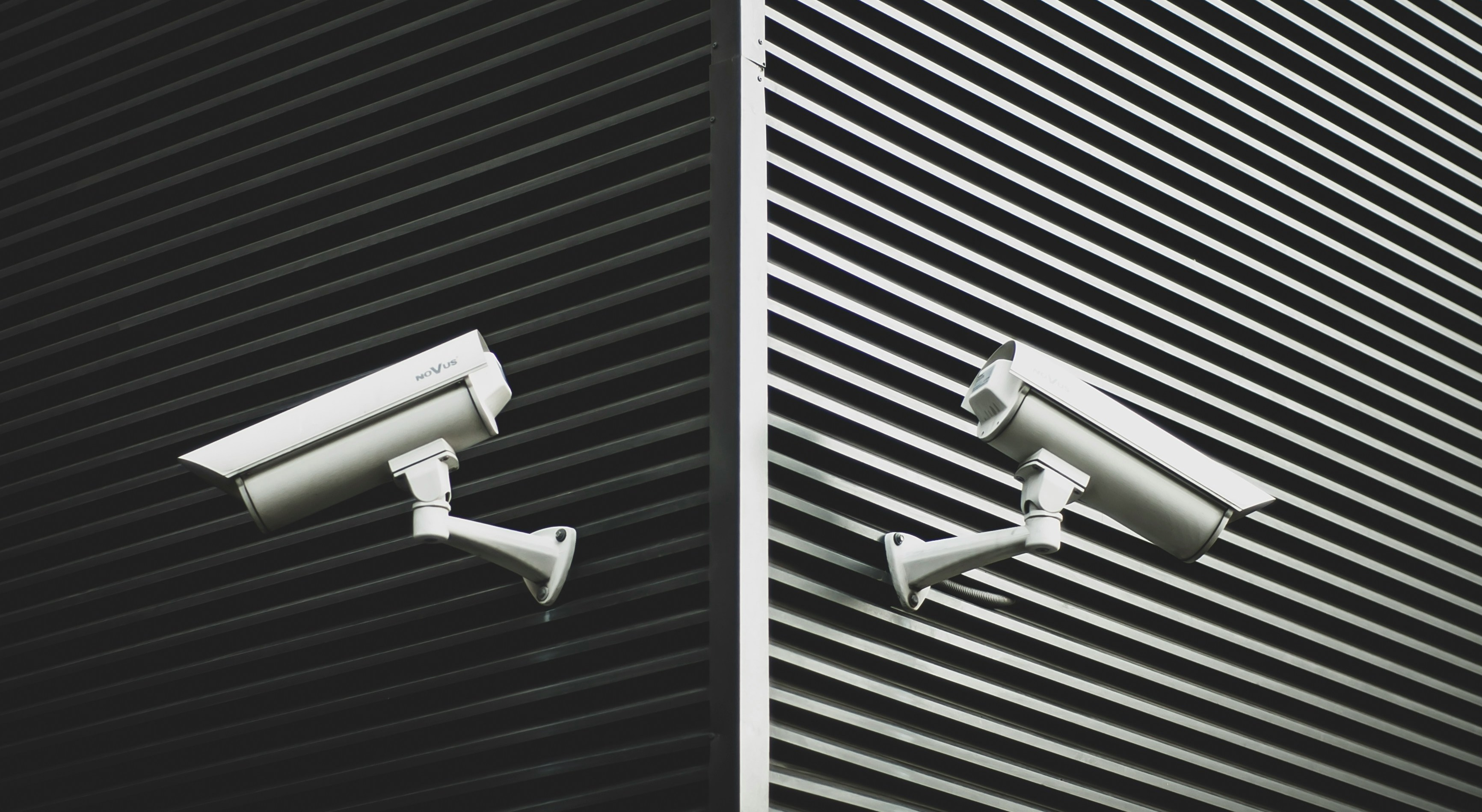
It makes us adjust to what is expected of us according to social norms or expectations. Think about it: have you ever tried harder because someone was watching you? Have you ever felt self-conscious knowing that a security camera might be recording you?
These are some examples of the observer effect.
Examples abound:
Hand washing: doctors and nurses wash their hands three times more when they know their hygiene is being monitored (Srigley et al., 2014).
Hawthorne Effect: workers, knowing they might be monitored, improve their productivity even though nothing in the environment changes (Friedman, 2014).
Hand disinfection: nurses and doctors increase their use of hand antiseptic by 55% when its use is monitored (Rath et al., 2016).
Jeremy Bentham (1791) took this idea to the extreme with the concept of the Panopticon.
He thought that if the possibility of being observed changes us, a circular prison could be built where inmates never know whether they are being watched from the central tower. That alone would be enough to keep them alert and moderate their behavior.
It’s an unsettling idea—to be potentially observed 24 hours a day…

Today, with the security cameras found on many streets, we could say we live in a modern version of that panopticon.
The mere fact of knowing that a camera might be recording you restrains you.
It influences you “for good,” since it increases polite and altruistic behaviors (Oda et al., 2015), but here the great dilemma arises: the more surveillance is used under the argument of increasing security, the more we sacrifice our privacy.
A debate that recalls the dystopian world of 1984 by George Orwell.
How far are we willing to give up part of our freedom in exchange for feeling safer or for promoting positive behavior in society?
Food for thought.
How to use it to your advantage
If reality can change simply by observing it, use it to your benefit.
Want to exercise? Go to a gym—being around people will motivate you.
Want to study? Go to a library—the environment will encourage studying.
Want to finish that project you’ve been postponing for months? Make it public, share your progress. External observation will push you to finish it.
During my university years, I saw this phenomenon countless times. My classmates said they went to the library to study simply because seeing others studying silently made them feel compelled to do the same.
No one behaves the same alone as when accompanied.
No one behaves the same alone as when being observed.
✍️ Your turn: In what other ways could you use the observer effect to your advantage? It’s striking how we change when we know others might see us, even if only through a camera or data record.
💭 Quote of the day: “I am the one who sees. From back here somewhere, I look out, and I am aware of the events, thoughts, and emotions that pass before me.” — Michael Alan Singer, The Untethered Soul: The Journey Beyond Yourself.
See you next time! 👋

References 📚
Bentham, J. (1791). Panopticon Or the Inspection House.
Friedman, J. (2014). Quantifying the Hawthorne Effect. World Bank Blogs. URL
Orwell, G. 1984.
Srigley, J. A., Furness, C. D., Baker, G. R., & Gardam, M. (2014). Quantification of the Hawthorne effect in hand hygiene compliance monitoring using an electronic monitoring system: a retrospective cohort study. BMJ Quality & Safety, 23(12), URL
Oda, R., Kato, Y., & Hiraishi, K. (2015). The Watching-Eye Effect on Prosocial Lying. Evolutionary Psychology, 13(3). URL
This is eerie and funny at the same time. When my husband is home, such as on weekends, I behave differently that when I'm alone. Alone, if I'm frustrated trying to do something, I yell and scream. I talk to myself more. When he's home, the yelling and screaming stops, but I still can't make myself stop talking. He's often confused by that and wonders is I'm talking to him. Half the time, I'm not. Poor man.