

Reading is not a competition (that's why I left Goodreads)
My obsession with quantity ruined my reading experience.

Welcome to Mental Garden, a newsletter about creativity, focus, and systems for writing and building projects on the internet. To explore the full library, go here.
The following letter is part of our “Notes on Giants” collection, in which we explore the thoughts and lives of humanity’s greatest minds.
🏷️ Categories: Learning, Literature.
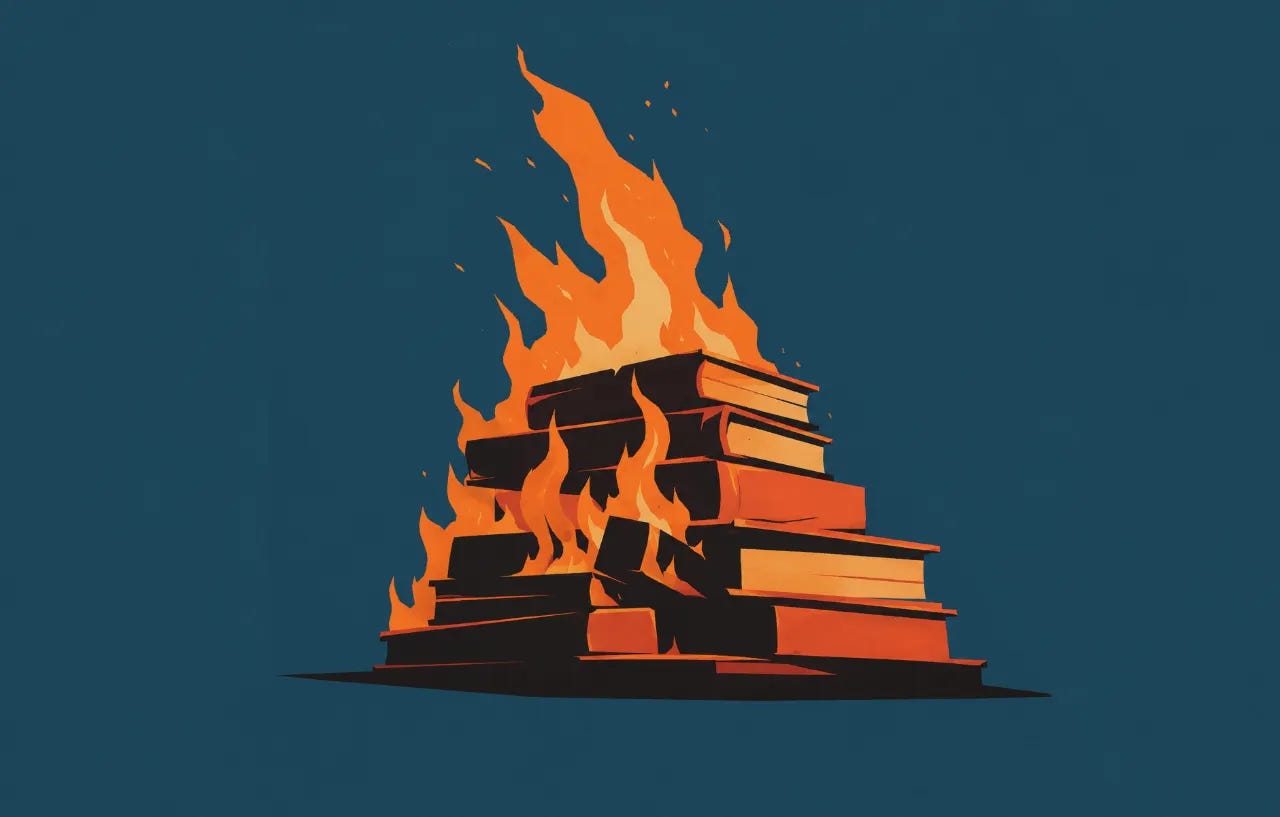
Read less.
The obsession with speed has turned reading into yet another form of anxious consumption. That’s what I felt when I opened Goodreads in January with the hope of doing the challenge of reading 52 books a year—that is, reading 1 book per week. A ridiculous idea, but at the time it seduced me, as if the only goal of reading were to accumulate books read. I reduced reading to a number, like someone counting calories.
Luckily, it all fell apart a few months later.
In February, with book number 6 in hand, I already understood that it didn’t make sense for me. Instead of thinking about quantity, I started thinking about quality—about reading slowly but internalizing and applying all those brilliant ideas I was underlining, which in the previous 5 books had served for nothing more than being forgotten within a week.
It took me almost 3 months to finish book number 6.
That book was Decisive: How to Make Better Choices in Life and Work, by Chip Heath and Dan Heath. Yes, almost 3 months for one book. The book was a goldmine; every few pages I had to stop, write something down, and think about how to apply that idea in my life. The book followed me everywhere, and for weeks I worked hard to change my habits and incorporate its key ideas until they became natural. It was so nourishing that it even sparked a series of 3 articles.
Just 1 book gave me more ideas than the previous 5 combined.
How could that be?
A matter of speed.
If I had read the previous 5 books slowly, they would have transformed me just the same. But instead, I let myself be carried away by the anxiety of wanting to increase my “Read” list. I left Goodreads, deleted my account, dropped the reading challenge—it was absurd.
We’ve turned reading into a simple obsession with consumption.
Even reading itself, a private act, has become another dashboard where you track your performance and publicly compare yourself with others, as if the goal of literature were to have the longest list of books read. It makes no sense.
The harsh reality is that nobody changes their life just by finishing a book.
That’s not how it works.
The books that change you are the ones you read slowly. You need to internalize those words, give them meaning within your worldview. I wrote it like this in my journal: “To change your life through a book, you must become that book.” And I still believe it, because a book shouldn’t just sit on your shelf and be forgotten.
You must become that book, and that is a slow process.
That’s what almost nobody is willing to do. The easy path is flipping pages while skimming, like scrolling through Twitter. Finishing a book in two afternoons is easy; the hard part is closing the book and realizing you now have to change your habits, conversations, routines, and decisions for months until those actions become unconscious. The hard part is accepting that a single sentence can force you to rethink the life you’ve been building for years.
That is what’s scary.
The same applies to videos, podcasts, newsletters, conversations, and films. They’ve become fast, indigestible consumption, at a dizzying speed the brain cannot fully process. That’s why the best reading advice I can give is this: read less, read slowly.
Give books enough time to change your life.

Want to go deeper? Here are 3 related ideas:
✍️ Your turn: How many ideas from the books you read last year have you actually applied in your life?
💭 Quote of the day: “Books can be dangerous. The best ones should be labeled ‘This could change your life.’” — Helen Exley
See you next time! 👋

And if I may tempt you with one more idea, capture what you find most worthy into you Zettelkasten where months (or even years) later you will encounter it again and the whole book will come back to you in an exhilarating flash.
I have also been through this process . The next phase , as you also began to realize, is to prove the reality of what is written. That is the final proof of the real ´wisdom´ of the writter. This reminds me of a the first chapter of the book ´El Mecanismo de la Vida Consciente, from the humanist Carlos Bernardo González Pecotche, whrere he describes (in 1956!) the mental scenario of the intelectual word at that time.... and today is far worst ((the book can be dowloaded here https://logosofia.org.es/es/libros/)