

How to train your brain to think differently
Notes on gigants - Number 53

Welcome to Mental Garden, a newsletter about creativity, focus, and systems for writing and building projects on the internet. To explore the full library, go here.
The following letter is part of our “Notes on Giants” collection, in which we explore the thoughts and lives of humanity’s greatest minds.
🏷️ Categories: Mental models.
You can train your brain to think better.
And one of the best ways to do that is by expanding the set of mental models you use to understand the world. Let me explain with the intriguing story of someone who saw an alarming problem differently from everyone else…
In 1854, a cholera outbreak struck the Soho district in London.
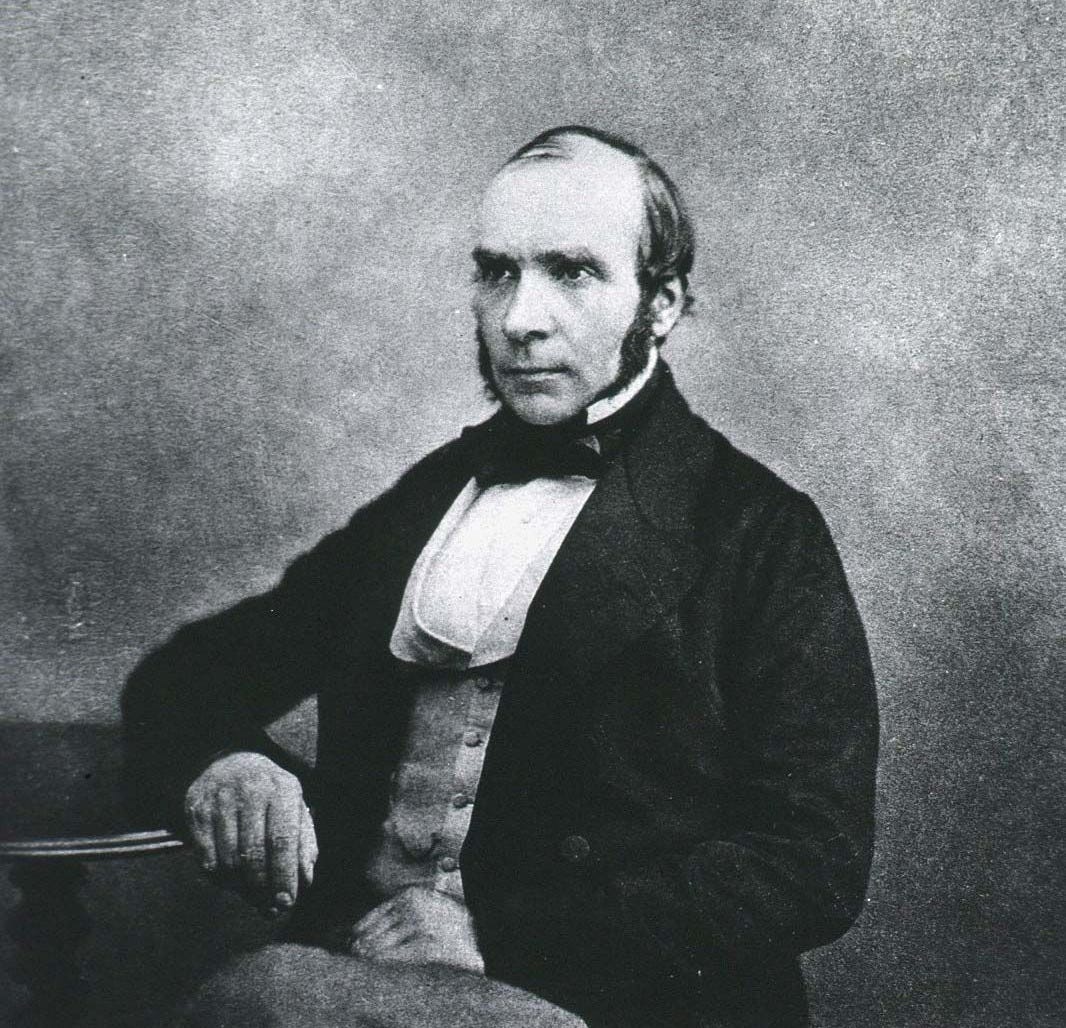
The disease spread rapidly, and for most people, the cause was a mystery. The dominant explanation at the time claimed that cholera traveled through the air, carried by foul smells. However, a scientist named John Snow did not look at the problem that way. Instead of simply observing the sick like other doctors, he turned to geography and used spatial analysis through maps. He mapped the cases, compared streets, spoke with families, and recorded daily habits. Little by little, a very different picture emerged from the idea of airborne contagion…
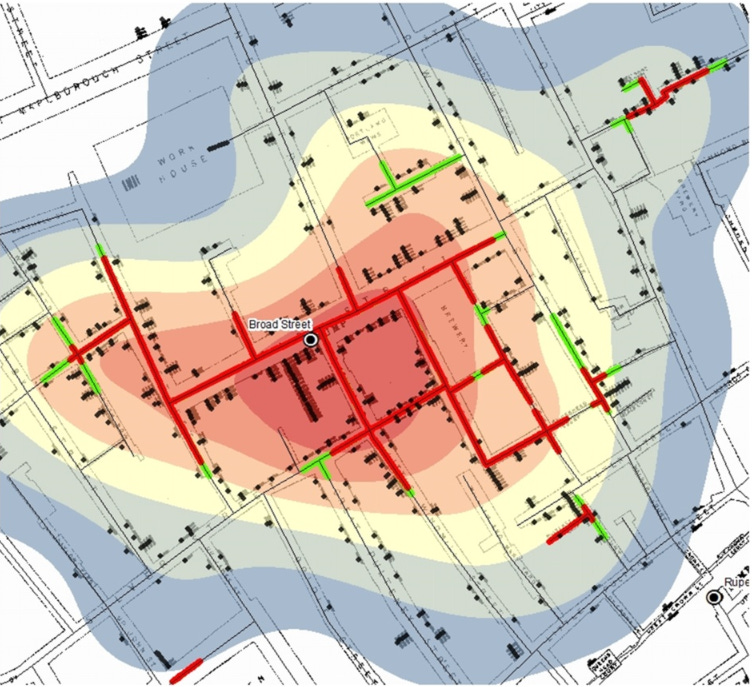
Many of the deaths were concentrated around the same water pump.
On Broad Street (Shiode et al., 2015).
Snow gained great recognition for solving the problem and making important advances in epidemiology. In reality, it wasn’t that John had more information than everyone else, nor was he more intelligent. He solved it because he used a different way of thinking and seeing the data. While others saw a disease, he used techniques from other sciences to search for causes, connections, human behavior, and urban infrastructure.
He had a broader mental toolbox.
This idea matters more than it seems. Often, the difference between a good decision and a bad one, between staying stuck and finding a solution, is not about working harder or being smarter. Sometimes, all it takes is thinking with a different model.
That’s the importance of mental models in life.

What is a mental model?
A mental model is an explanation of how something works.
It is a concept or worldview you carry in your mind to interpret reality and understand the relationship between things. For example, supply and demand is a mental model that helps explain economics. Game theory helps explain social relationships, and entropy helps explain disorder and chaos.
Mental models guide your perception and behavior.
They are the tools you use to understand life, make decisions, and solve problems. Learning a new one is like unlocking a new way of seeing the world, just as John Snow saw the cholera outbreak from an angle others had not used. And yes, mental models are imperfect — none explains reality completely — but they are useful because they allow us to simplify complex reality so we can decide and act in this chaotic world.
That is the key.
The best mental models are the ones most useful in real life. Understanding them helps you choose better and act better, which is why it is worth developing a broad foundation of mental models to understand reality.
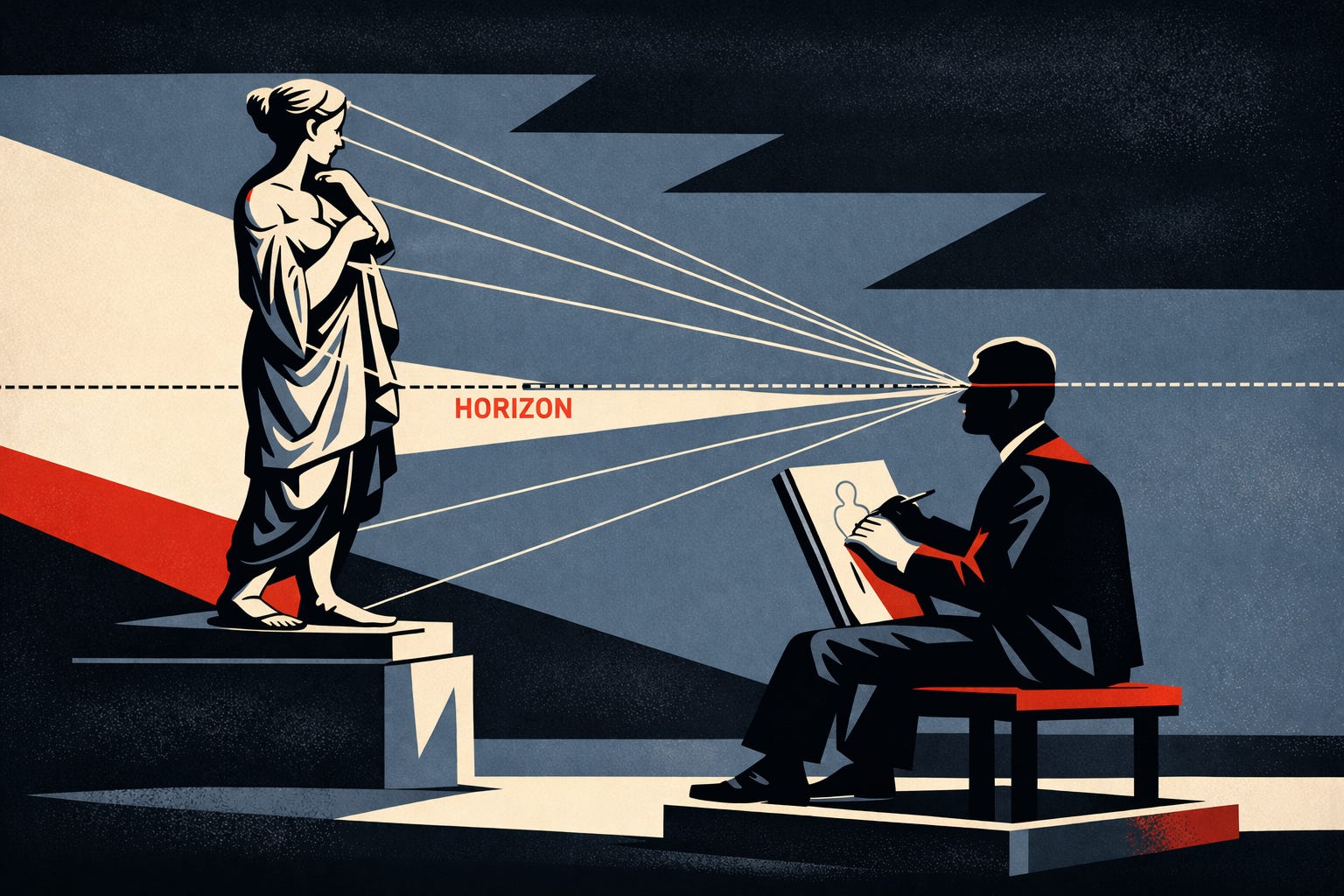
The secret to thinking and deciding better
Expanding your set of mental models is something even experts do.
We all automatically rely on explanations to understand why things happen; in psychology, these mental shortcuts are called “heuristics.” The more experience you develop in an area, the more likely you are to rely on the same lenses to see reality, because they are the ones that have worked best for you.
And that is where the problem appears.
When one worldview dominates your thinking, you begin explaining every problem through it. This issue is especially common among highly intelligent or highly skilled people in a specific field. It is known as the “Law of the Hammer,” popularized by the phrase: “If the only tool you have is a hammer, everything will look like a nail.” And yes, perhaps in some cases you can solve the problem with a hammer, but that does not mean it is the best option available.
That is why the secret to thinking well is building a broad toolbox.
Expand your mental toolbox
Good news: you do not need to master every detail of every subject to think better.
Of all the mental models humanity has created, just a few dozen explain a large part of how the world works. This is due to the Pareto distribution, where 80% of results come from 20% of causes. Ironically, a mental model itself explains why only a few mental models are enough.
If you master the fundamentals of several disciplines, you will have a solid foundation for deeply understanding any topic, making decisions, and thinking precisely.
That is precisely my personal aspiration.
Every week, I dedicate time to analyzing mental models and sharing the best ones in Mental Garden to help other people. I have already written about several of them, such as entropy and inversion or the Pareto distribution, and I will continue exploring more.
The goal is to gather the most useful mental models from different disciplines and explain them in a way that is easy to understand, practical, and applicable to daily life.
With a little effort, we can all learn to think a little better.
Enter here to see the complete list of mental models.
Want to learn more? Here are 3 related ideas to go deeper:
✍️ Your turn: What problem have you been unable to solve for a long time that might need a different approach?
💭 Quote of the day: “The world is full of obvious things which nobody by any chance ever observes.” — Arthur Conan Doyle, The Hound of the Baskervilles
See you next time! 👋

References 📚
Shiode, N., Shiode, S., Rod-Thatcher, E., Rana, S., & Vinten-Johansen, P. (2015). The mortality rates and the space-time patterns of John Snow’s cholera epidemic map. International Journal Of Health Geographics, 14(1), 21. URL