

Toaster project: how innovative ideas are born
Never start from scratch

Welcome to Mental Garden. The following letter is part of our “Distilling Books” collection, in which we extract the most revealing ideas from literature. For the complete library, click here.
🏷️ Categories: Creativity.
In 2010, Thomas Thwaites decided to build a toaster from scratch.
He bought the cheapest one he could find, took it home, and disassembled it piece by piece. He assumed it would be a simple object. When he finished, more than 400 parts were spread across the table. That machine turned out to be a masterpiece of collective engineering. For months, he tried to replicate it: he smelted iron, extracted copper, made plastic… In the end, his toaster worked for only 5 seconds before melting like ice cream in the sun.
And even so, his experiment revealed a truth we ignore every day.
This is the story of a toaster — and what it can teach us about being creative.
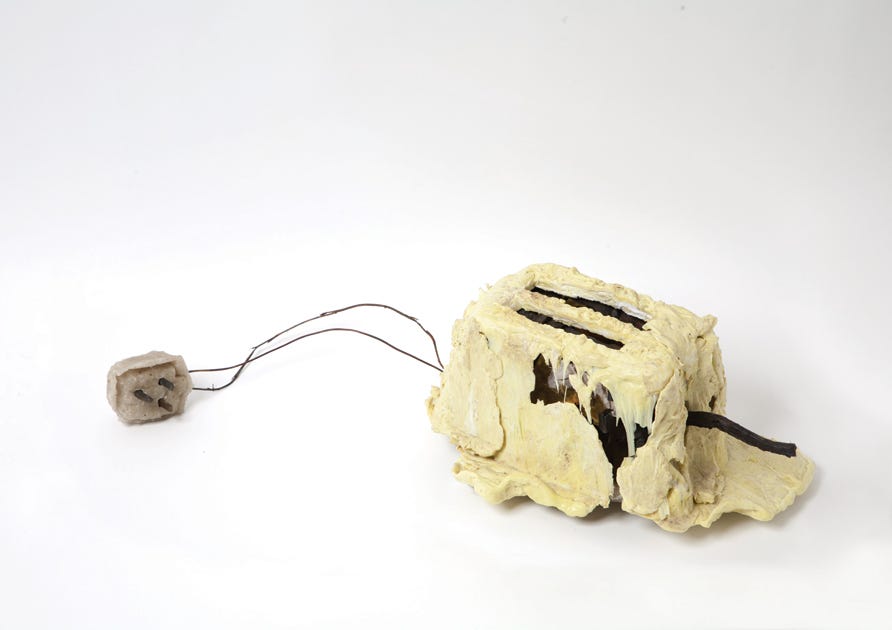
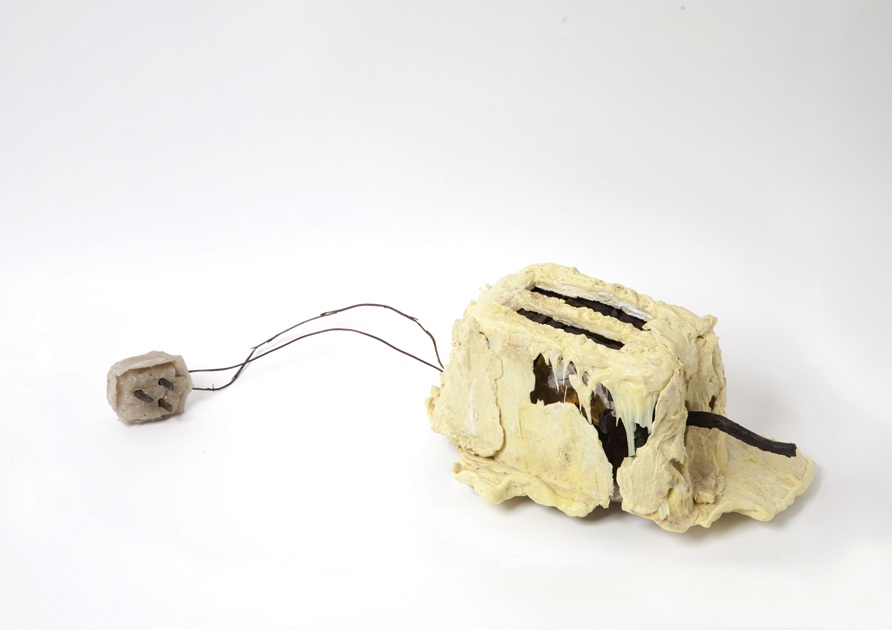

1. The Impossible Toaster
What if I built a toaster from scratch?
That was the idea of Thomas Thwaites, a young British designer with more curiosity than common sense. What he didn’t know was that this question would lead him to rediscover the most obvious secret of the creative process: no one creates alone.
To extract iron, he asked an old miner for help and went with him into a cave.
To obtain copper, he contacted a retired geologist on an island in Wales.
To manufacture plastic, he visited a recycling plant in Manchester.
To melt metal, he approached a mining professor in London.
Every step was a reminder: behind every idea there are other people, other hands, other discoveries.
“I thought I could do it in a few months, but soon I understood that if I truly started from absolutely nothing, I could spend an entire lifetime making a toaster.” — Thomas Thwaites, The Toaster Project.
Nothing emerges in isolation. The solitary genius doesn’t exist.
Creativity is learning from those who have already walked part of the path.
Look around you. Nothing you use today would be possible without thousands of previous discoveries accumulated over centuries. Everything is built on the blocks others laid before us.
The Wright brothers weren’t the first to attempt flight; they just learned from those who failed before them.
Picasso didn’t invent cubism; he simply pushed further the artistic boundaries Cézanne had already begun to question.
Elon Musk didn’t invent rockets at SpaceX; he simply advanced what NASA and the Soviet Union had created decades earlier.
Progress happens when someone looks at what already exists and says: “What if we try it this way?”
2. Innovation Lives in the Limits
The more limited your range of action, the more creative you become.
Thomas set three constraints for himself:
Build the toaster himself.
Use only household tools.
Make each piece from raw materials.
The result was an experiment doomed to fail, yet it taught him an essential lesson: limitations spark creativity.
Thomas’ biggest obstacle was plastic. He couldn’t refine it from crude oil, so he tried using potatoes. Yes, potatoes — you read that right. He mixed them with vinegar and glycerin to create a viscous mass that he poured into a wooden mold.
The limitations forced him to think differently.
But most of us do the opposite: we think we’ll be more creative with infinite possibilities. A blank page, a blank canvas, an idea without borders. And what we usually get is paralysis from too many options.
Creativity doesn’t flourish with endless possibilities — you need constraints.

3. Connect More and Create Less
The world is already full of pieces. What’s missing are people capable of joining them.
When Thomas disassembled his toaster and saw the 400 pieces on the table, he understood something that would change the way he thought: a toaster is not a creation, it’s a novel combination of things that already exist.
That’s creativity: a new arrangement of familiar elements.
Each component (iron, copper, mica, plastic) was an improvement over past attempts. Innovation is much more about connecting ideas than creating them. It’s iteration, failure, and adjustment. Each attempt brings you closer to a clearer version of what works, discarding the useless parts and adding more that fit well together.
This idea applies to any creative act.
A novel, if you think about it, is also an assembled machine. Each piece plays a role: characters, plot, narrator, rhythm, setting, tone. If one piece fails, the structure fails. A good artist must know the pieces to know what fits with what.
James Joyce understood this with Ulysses: he didn’t invent a story — he reconfigured the classic Odyssey with a modern, 20th-century mindset.
Gabriel García Márquez did the same with One Hundred Years of Solitude: he blended realism with magic, and from that combination something new was born.
J.K. Rowling took universal archetypes we’ve seen in many stories and assembled them with such coherence that her universe felt intriguing.
None of them started from zero; they simply understood each piece and knew how to mix them.
That’s what defines an artist: being an expert in combination.
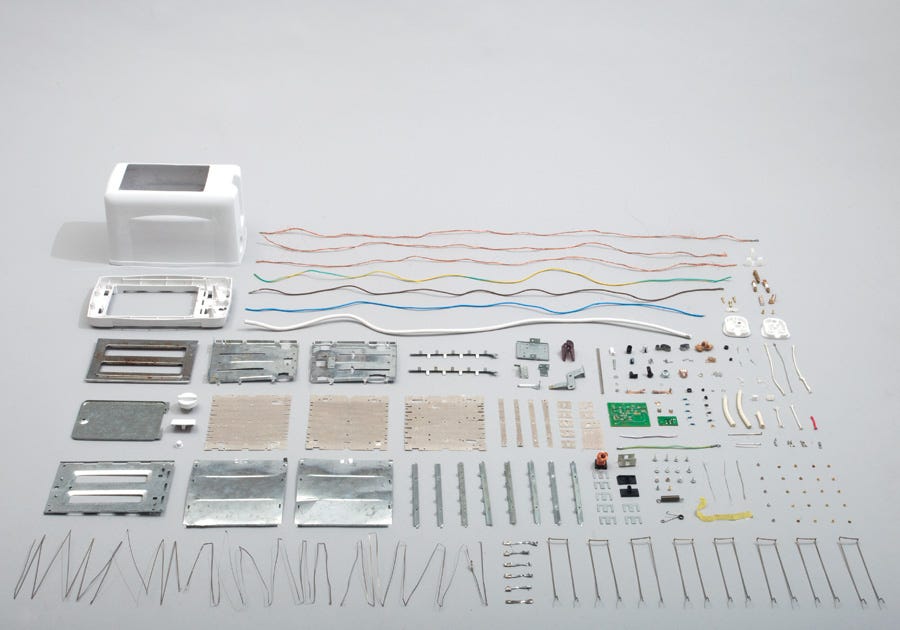

This table full of pieces could be your next novel, song, or painting.
Now it’s time to study the pieces — and combine.
✍️ Your turn: What connections could you make between your ideas, skills, and past experiences for your current creative project?
💭 Quote of the day: “Think progress, not perfection.” — Ryan Holiday, The Obstacle Is the Way
See you in the next letter! 👋

References 📚
Thwaites, T. (2012). The Toaster Project: Or A Heroic Attempt to Build a Simple Electric Appliance from Scratch.
Such an interesting and delightful story! I love how it shows that creativity isn’t about genius, but about connection, curiosity, and limits. I write about this too: how creativity is a muscle you can train, one small experiment at a time.