
Vincent van Gogh and the danger of comparing yourself to others
Notas on gigants - Number 41

Welcome to Mental Garden. The following letter is part of our “Notes on giants“ collection, in which we explore the thoughts of humanity’s greatest minds.
To see the full library, click here.
🏷️ Categories: Life lessons, Motivation.
Vincent van Gogh never got to live the success that is associated with his name today.
For much of his life, the only thing he felt was doubt.
Van Gogh was a painter. In just a decade, he created nearly 000 paintings and hundreds of drawings. He worked with extraordinary intensity. Yet recognition never came, no matter how hard he tried. Other artists received praise and enjoyed financial stability. After that prolific decade, he described his own work as of “very secondary” importance (Department of European Paintings, 2010).
Van Gogh barely managed to sell a single painting during his lifetime… (Thiange, 2023).
He spent long hours reflecting on his work and its value. In many letters he sent to his brother Theo—who supported him financially and emotionally—he expressed his confusion. In one he wrote…
“Today I saw Dr. Gachet again and I’m going to paint at his house on Tuesday morning, then I’ll dine with him and afterwards he’ll come to see my painting. He seems very reasonable to me, but he is as discouraged by his work as a country doctor as I am by my painting… (Van Gogh, June 4, 1890).
He felt a burning desire to create, but he always doubted the value of what he created.
He never managed to resolve that doubt.
He died two months after writing this letter, without knowing that decades later his work would change the history of art and be admired all over the world. His story reflects an uncomfortable truth: we are terrible judges of our own work.
We don’t have the faintest idea what impact our work will have.
All that remains is to create—not to judge the creation.
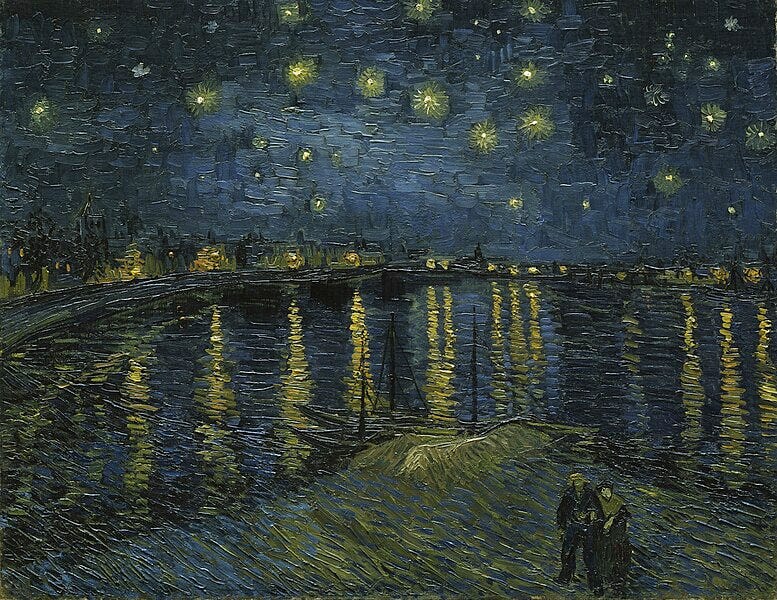


Judging isn’t our task
For two years, I’ve published articles every two days in Mental Garden.
Some days the words flow. Other days they don’t. There have even been many occasions when I’ve felt a smaller version of what Van Gogh experienced. The truth.
“I wrote a good article. Why does it seem like no one cares?”
“This article is average… how has it become the most-read piece of the month?”
In the end I learned something: we are terrible at evaluating our own work.
Van Gogh’s story takes this idea one step further. It’s not just that we’re bad judges—it’s also not our task to judge it. It’s not our job to compare it with other people’s work. It’s not our task to determine how much value it has or how useful it might be. It’s not our job to tell ourselves: “It’s not worth it.”
Our responsibility is to create.
In almost any profession, there are people who turn their daily work into a form of art. In some way, we all create. And whoever creates also judges—but the key is not letting that judgment paralyze you.
Great artists keep creating, even when it’s hard.
Watch the court, not the scoreboard
In my first basketball team, I remember my coach would stop the game and during halftime he would always tell us: “keep your eyes on the game, not on the scoreboard.”
Maybe he was just trying to teach kids not to get distracted by who was scoring more, or not to fall apart if we were losing. But within that sentence there was a deeper message: it doesn’t matter whether you’re up by 20 or down by 40. The only thing that makes a difference is what you do now on the court.
What makes the difference is playing your part of the game.
The same goes for your craft. No matter what you do with your days, every morning you step onto the court with a game to play. If what you do doesn’t meet other people’s expectations, that’s not your business. How others perceive your work depends on their tastes, experiences, and expectations. None of those three things depend on us.
Your responsibility is to play, not to judge the game.
The key is to fall in love with the game, not the scoreboard.
Keep your eyes on the game.
Want to learn more? Here are 3 related ideas to go deeper:
✍️ Now it’s your turn: What small action could you take right now to fall in love with your craft without thinking so much about the outcome?
💭 Quote of the day: “The artist who commits to his calling has volunteered for hell, whether he knows it or not. You will dine for a long time with isolation, rejection, self-doubt, despair, ridicule, contempt, and humiliation.” — Steven Pressfield, The War of Art.
See you next time! 👋

With the article, you've hit the mark of what's so fascinating to me about creating posts for substack. It always surprises me to look at the rating lists of my posts, which ones are popular, and whick are not so much. Sometimes, I post a piece that I wonder if it will bomb. Then I see how well it did. Always a surprise. And as you said in this article, we will never know the impact of our work. Somewehre out there is a person who read something that changes their whole day. Thank you for this story of Van Gogh. His was a very unique story.