

Einstein's letter to his son that reveals the secret to learning anything
Notes on gigants - Number 57

Welcome to Mental Garden, a newsletter about creativity, focus, and systems for writing and building projects on the internet. To explore the full library, go here.
The following letter is part of our “Notes on Giants” collection, in which we explore the thoughts and lives of humanity’s greatest minds.
🏷️ Categories: Learning, Attention.
November 25, 1915 was the day Einstein presented the theory of general relativity to the Prussian Academy of Sciences. The work, built over nearly a decade, propelled him to global fame and secured his place in the history of physics.
A few days earlier, he had written a revealing letter to his 11-year-old son.
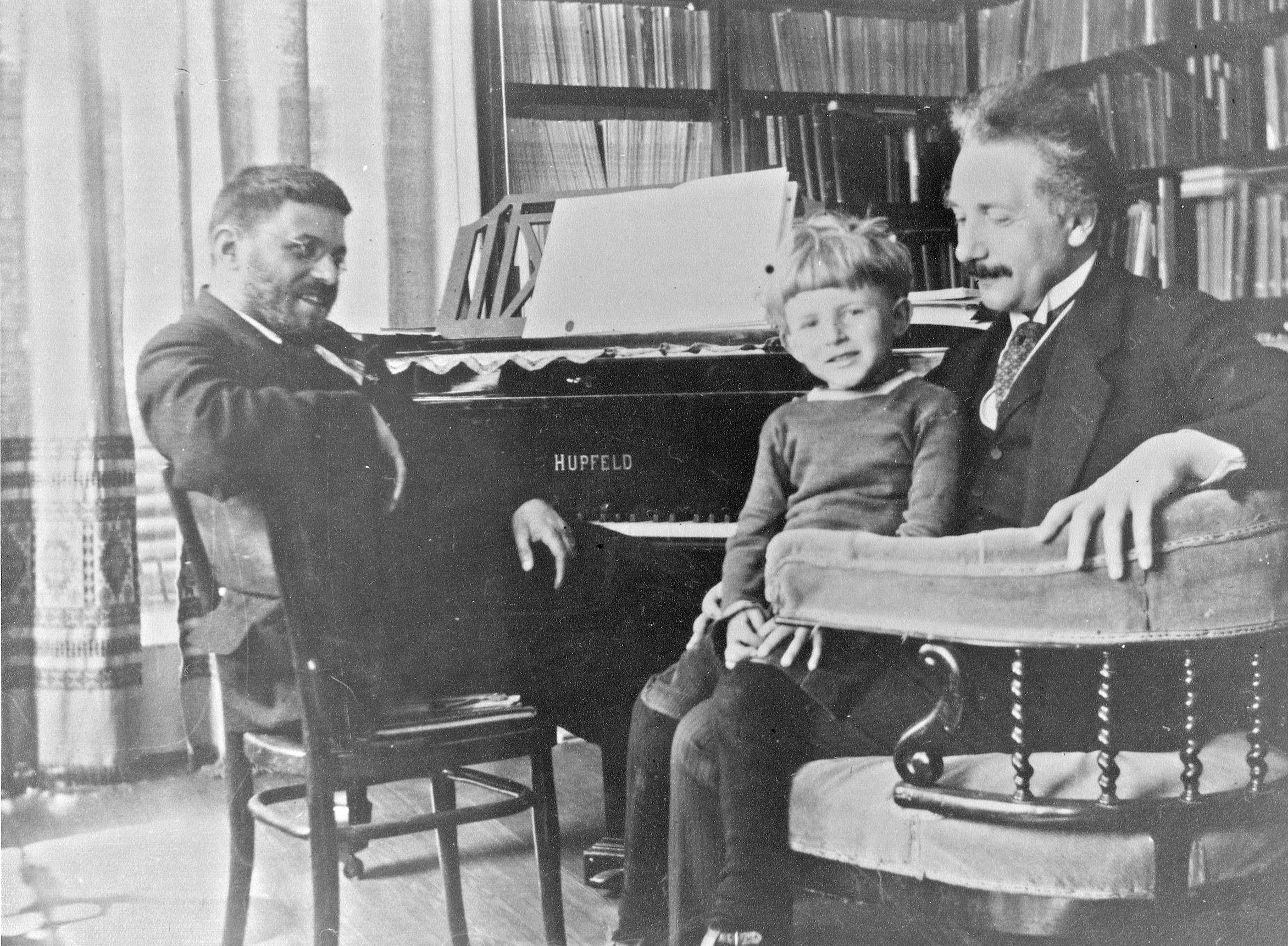
The letter was addressed to Hans Albert, who was living in Vienna with his mother, Mileva, and his brother Eduard (Lawson, 2008). The letter is not about science, but about learning, attention, and curiosity as a way of life.


My dear Albert,
Yesterday I received your letter and was very happy about it. I was afraid that you no longer wanted to write to me.
When I was in Zurich, you told me that it feels uncomfortable for you when I come to visit. Therefore, I think it would be better if we met somewhere else, where no one would interfere with our comfort.
In any case, I will insist that every year we spend a whole month together, so that you can see that you have a father who loves you. You can also learn good and beautiful things from me that others cannot offer you so easily.
What I have achieved through so much hard work should not be only for strangers, but especially for my children. These days I have completed one of the most beautiful works of my life. When you are older, I will tell you about it.
I am very pleased that you enjoy playing the piano.
For someone your age, I think piano and woodworking are the best activities, even better than school. They are things that fit you naturally. Play what you enjoy, even if your teacher has not assigned it.
That is the way one learns the most: when you do something with such enjoyment that you do not notice time passing.
Sometimes I become so absorbed in my work that I forget about lunch.
Give Tete a kiss from your father.
Greetings to your mother.
Learning Happens Naturally
This sentence says it all: “That is the way one learns the most: when you do something with such enjoyment that you do not notice time passing.”
For Einstein, the key to learning was doing something out of passion—something so natural to you that you learn without even realizing you are learning. He does not force his son to do what he is supposed to do; instead, he recommends woodworking and piano because he knows they are attractive and natural for him.
That is where someone can truly shine.
When you do something driven by your passions, becoming good at it is almost inevitable.
For someone who does not enjoy playing the piano, practicing for two hours can feel like torture, and maintaining focus becomes difficult.
For someone who loves playing the piano, practicing for three hours can be pure joy, and they will devote their full attention to the process.
This applies to everything. The more you force yourself to do what you dislike simply because it is what others expect of you, the further you move away from discovering your true potential. To become a genius, you must first discover what you would gladly do for hours purely for the pleasure of it.
Those who are curious and passionate about something eventually excel in that area.
Flow
“The world cannot reject someone who comes from passion. Stay focused on what you love.” — Robert Greene, Mastery
Einstein intuitively understood something that psychology has since given a name to: the flow state.
It is that moment when you become so immersed in what you are doing that you forget the time and even whether you are hungry. Surely there is something that makes you feel this way, right? This flow state makes your greatest achievements possible, and understanding how it works is key to making the most of it.
The most important thing to know is that it is a temporary state.
You cannot remain in a state of flow 24 hours a day because it consumes a great deal of energy and produces mental fatigue. The optimal approach is to alternate between periods of deep focus and periods of genuine rest.
This is how I like to do it:
Work for 50 minutes, focused on one single task.
Take a 10-minute break (walk, water plants, look at the scenery, etc.).
Every 4 or 5 cycles, take a longer break of 15 to 30 minutes.

In addition, you should avoid interruptions during a flow state.
To give you an idea, it takes us about 25 minutes to return to a flow state after being distracted (Mark et al., 2008), and around 50% of people cannot go a single hour without becoming distracted (Dropbox, 2023). That is the root of the problem, because without sustained attention, it is impossible to achieve anything truly meaningful.
The easiest way to become good at something is to do things that absorb you so completely that you disappear into them.
We may never become Einstein, but it is clear that genius begins with enjoyment and curiosity. Be curious and try many different things; that is how you discover what truly excites you. Only then can you cultivate something with burning passion and excel at it.
Just flow and enjoy the process.
Want to Learn More? Here are 3 related ideas to explore further:
The lesson of an ancient sage for mastering any skill in life
How to master any skill, according to the greatest sushi chef in history
✍️ Your turn: What activity could you do for hours without noticing the passage of time, as if learning were happening effortlessly?
💭 Quote of the day: “Most people focus on the wrong thing; they focus on the result, not the process.” — Ronda Rousey, My Fight / Your Fight
See you next time! 👋
