

Before the world believes in you, you have to believe in yourself
Notas on gigants - Number 46

Welcome to Mental Garden, a newsletter about creativity, focus, and systems for writing and building projects on the internet. To explore the full library, go here.
The following letter is part of our “Notes from Giants” collection, in which we explore the thoughts and lives of humanity’s greatest minds.
🏷️ Categories: Life lessons, Motivation.
In Pasadena, California, a girl grew up in poverty without knowing what her final destiny would be.
Her father, a shoeshiner, died when she was three years old. Her mother worked as a domestic servant. She was shy, was bullied at school, and had dyslexia, which made school even harder. In spite of everything, from a young age she wanted to be a writer (Smith, 2001).
Over the years, this woman moved from one temporary, low-skilled job to another.
She wrote for years, but success did not come. She sold a few stories, but then came more rejections and more precarious jobs before she published her first novel, Patternmaster, in 1976. Several years later, she was finally able to start making a living from writing and gradually leave temporary jobs behind. Later came books like Kindred, as well as Hugo and Nebula awards, two of the biggest prizes in science fiction.
That woman was Octavia E. Butler, the most influential Black science fiction writer.

The Rise of Octavia E. Butler
Octavia E. Butler was a foundational science fiction novelist and short story writer.
She published her first novel in 1976, wrote key works like Kindred, and over time won some of the most important awards in the genre. Decades later, she remains a central author. Her journey is even more striking when you know her story. She did not come from the “right” place, she had no connections, nor did she have financial security or an extensive education.
How did she go from temporary jobs to becoming one of the most influential writers?
There are many pieces in that puzzle, but one of them is the central piece.
Before life gave her opportunities, she worked to create them for herself.
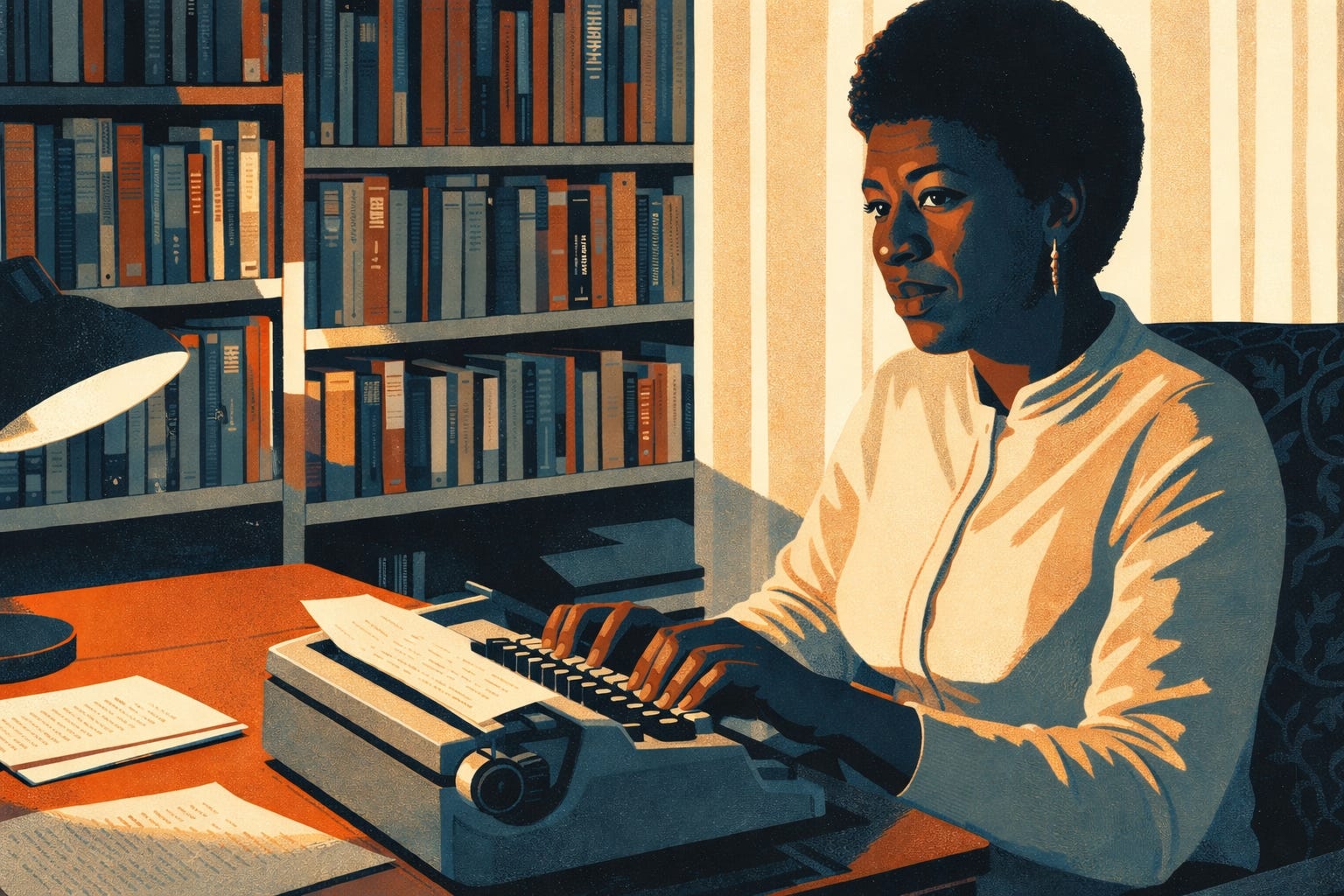
It’s not your fault, but it is your responsibility
Octavia did not choose to grow up in poverty.
I do not think she chose to lose her father as a child. Nor do I think she dreamed of spending years jumping from one temporary job to another while writing at dawn, exhausted and with no guarantees of anything. Even though none of that was her fault, she did decide to create her own opportunities from that starting point (Hatch, 2009).
When she had no time, she got up before everyone else to write.
When she could not continue one job, she found a way to survive through the next one.
When publishers rejected her and would not open the door, she kept writing.
Before life believed in her, she believed in herself.
In texts and interviews, Octavia returned to that idea again and again: what mattered was not waiting for inspiration or for opportunities to arrive. What was indispensable was to persist no matter what happened and devote herself fully to writing.
“Who am I? I’m a 47-year-old writer who remembers having been a writer at 10 and who hopes to still be one someday at 80.” — Octavia E. Butler, interview with Jelani Cobb (1994) in the book Conversations with Octavia Butler (2010).
“Keep writing. Keep writing. It’s the old idea that behavior which is rewarded tends to be repeated. If you stop writing, you’re rewarding yourself for not writing.” — Octavia E. Butler (Goodman, 2021).
That way of thinking defined her life.
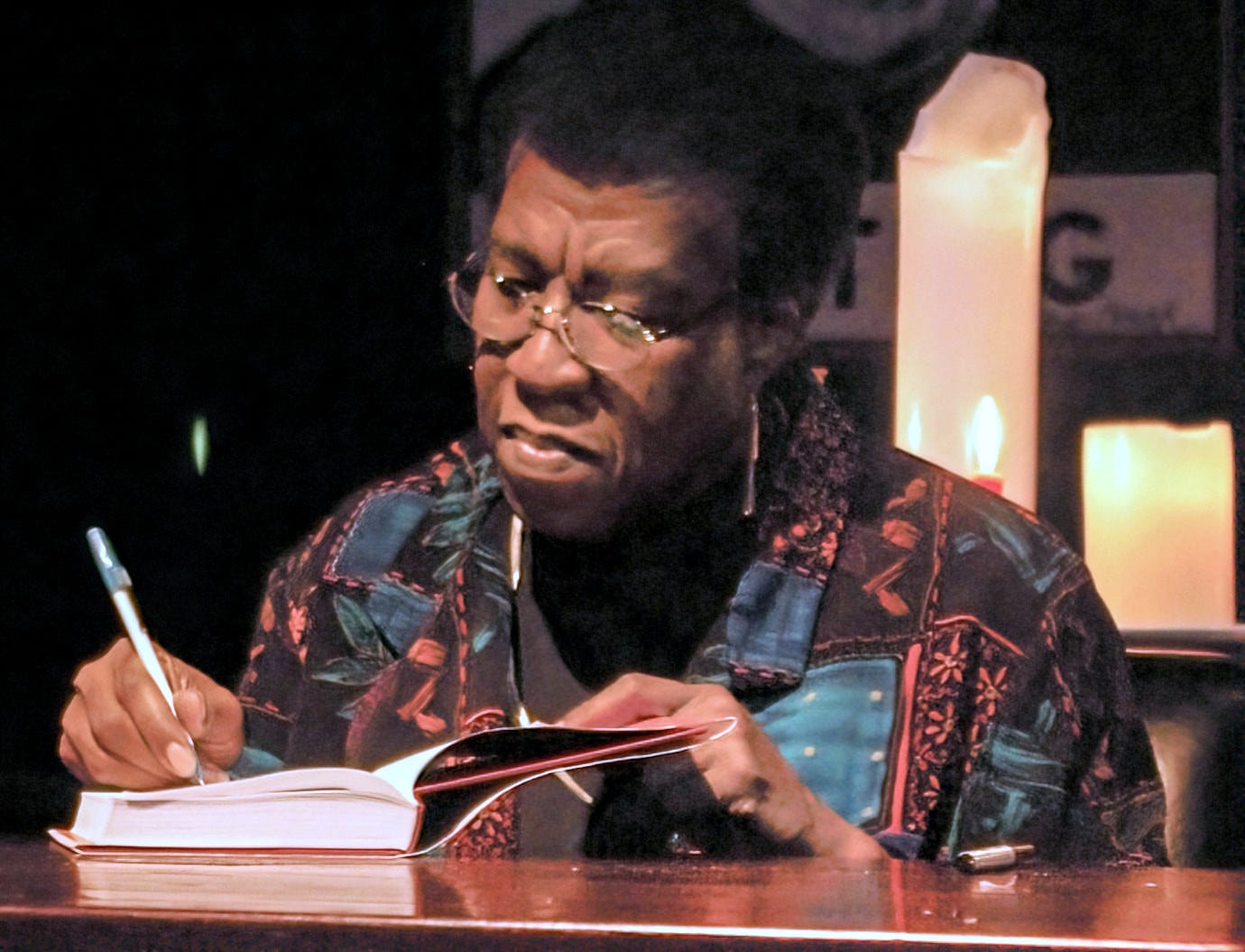

I have not gone through even a fraction of what Octavia went through, but even in my own smaller battles I have noticed the power of persistence. There are many events and situations in our lives that we cannot control, but we can control our response to those events and situations. Octavia knew a great deal about this.
Sometimes we assume that successful people had it easy, and that is why they are where they are.
Clearly, being in the right place, knowing the right person, having the right genetics, or having a good financial situation are important factors. It is more comfortable to think that this is all there is to it, because then we can say that they had advantages and you did not, and that this was the decisive difference.
And yes, luck matters, but luck is nothing more than an opportunity.
You have to decide whether to take it or not.
Looking back, surely today we could point to many moments in which luck played some role in Butler’s journey. Almost all of those opportunities would have been useless if she had not decided to make use of them. Before the world believed in her, she had to believe in herself.
Sometimes, the people who end up seeming like “the chosen ones” chose themselves.
The admired authors
The successful entrepreneurs
The elite athletes
The brilliant artists
When they were still nobody, they chose themselves. When no one believed in their potential, they did. Even if you still do not feel ready and no one applauds your efforts, that may be the beginning that takes you to the top.
What should you do now?
We love success stories, but there is very little glamour in getting up early to write before a work shift. There is very little glamour in piling up rejections while trying to improve. It is not easy at all to believe in yourself when every day is a challenge.
I remember my first months as a writer.
They were exhausting. I made (and still make) many mistakes. Barely five people read me, and it took me a week to write a draft that, being generous, we could call “mediocre.” Now, looking back, I am grateful that I kept going and kept trusting myself when every day seemed like a ridiculous waste of time.
I think there are many goals in life that demand that kind of struggle.
For Octavia, it meant choosing to be a writer while she still worked precarious jobs, being a Black woman in 1980s America and coming from a humble family. She wrote at dawn, and no one could guarantee that it would work out. For you, it may mean choosing yourself when…
you have no connections
you have no experience
you barely have any resources
you still do not feel ready
Before other people believe in you, believe in yourself first.
Want to learn more? Here are 3 related ideas to go deeper:
You Don’t Need to Feel Ready to Start: The Hard Life of Writer Toni Morrison
Practicing Matters More Than Standing Out: Stephen King’s Lesson for Success
✍️ Your turn: Are you willing to be “mediocre” for long enough to become good?
💭 Quote of the day: “I began writing about power because I had so little.” — Octavia E. Butler, “The Science Fiction of Octavia Butler”
See you next time! 👋

References 📚
Butler, O. E. (2010). Conversations with Octavia Butler.
Goodman, A. (2021). Remembering Octavia Butler: Black Sci-Fi Writer Shares Cautionary Tales in Unearthed 2005 Interview. Democracy Now! URL
Hatch, S. D. (2009). Encyclopedia of African-American Writing: Five Centuries of Contribution : Trials & Triumphs of Writers, Poets, Publications and Organizations.
Smith, V. (2001). African American Writers.
I began publishing in local papers in 1973, but my writing career truly took off in 1978, focusing on journalism. While my work also reflects the depth and rigor of a college scholar, I’ve never intended to make any money from it. I've always kept my focus on the quality of my writing, just as (the late?) William Zinsser would.
https://hxlibraries.substack.com/p/when-collegiality-becomes-censorship
https://indepnews.org/en/academic-dissent-at-universite-laval-during-covid/
https://indepnews.org/en/academic-dissent-at-universite-laval-during-covid/
https://www.erudit.org/fr/revues/cgq/1994-v38-n105-cgq2677/022467ar/
P.S.: As George Packer noted back in 2008, while introducing Orwell’s finest work, pursuing a career like Orwell’s would be tough today. Writing has become highly specialized, genuine independence is rare, and major newspapers and magazines leave little space for strongly individual essays. It was already hard enough to make a living as an essayist when Orwell was alive—in 1944!