

Practice Matters More Than Standing Out
Notas on gigants - Number 44

Welcome to Mental Garden, a newsletter about creativity, focus, and systems for writing and building projects on the internet. To explore the full library, go here.
The following letter is part of our “Notes from Giants” collection, in which we explore the thoughts and lives of humanity’s greatest minds.
🏷️ Categories: Continuous improvement, Deliberate practice, Writing, Motivation, Life lessons.
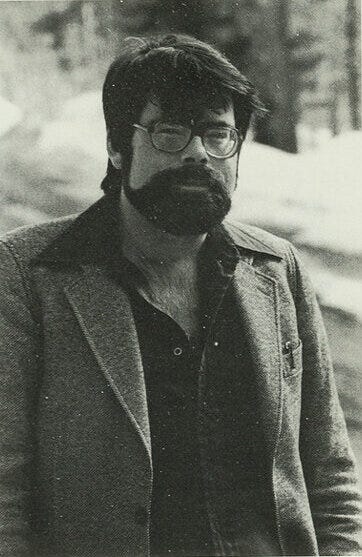

In his early days, Stephen King would stay up at night writing stories.
He was not a famous writer. Not even a professional writer. He was an English teacher in the state of Maine. During the day he taught classes to make a living. At night he sat down to write. That was it: write every day in the hope that, someday, some publisher would publish his stories (King, 2000).
Nothing glamorous.
Staying up late to write.
During those years, he sent stories to magazines and publishers again and again. He was trying to make his way into the literary world. Sometimes he managed to publish a short story in magazines. Many other times he received rejection letters. Meanwhile, life went on.
And the bills had to be paid.
To support his family, Stephen had to juggle several jobs. In addition to teaching, he also worked at an industrial laundry. Between shifts, he found time to keep writing (Britannica, 2026).
That was his rhythm of life: work to live, and write whenever he could.
But everything changed in 1973.
That year he began writing a story that would later become the novel Carrie. At first, he thought the manuscript was not worth the effort and threw the first pages in the trash. It was his wife, Tabitha King, who rescued them and encouraged him to continue with the story (King, 2000).
King went back to the manuscript.
And he finished the book.
The novel was finally published in 1974 and became a success. Thanks to the warm reception of Carrie, Stephen King was able to stop scraping by with odd jobs and devote himself to writing full-time (Britannica, 2026).
Years later, he would sum up that stage of his life with a simple piece of advice:
“If you want to be a writer, you must do two things above all others: read a lot and write a lot.” — Stephen King, On Writing.
In other words: if you want to become a professional writer, start by writing and reading.
It may sound obvious.
But it contains a valuable life lesson that we often ignore.

You do not need to be the best
We live in a world increasingly obsessed with comparison.
Modern hyperconnectivity allows us to constantly see other people’s achievements, metrics, and successes. That creates a dangerous belief: “There are brilliant people out there. I’m not on their level.” And when we think that way, we stop trying. That mindset dismisses the value of the process and ends up killing our initiative.
But there is another way to look at things.
Instead of measuring our worth by rankings or comparisons, we can focus on something far more important: continuous improvement and what we are able to learn and contribute each day. Seen this way, success is defined by internal comparison.
Stephen King’s story illustrates exactly this idea.
For years he wrote stories that no one wanted to publish. But in the process, he cultivated his writing ability, his daily discipline, and his capacity to finish what he started. This happened long before his books became bestsellers.
Notice that detail. It matters.
You do not need to be a bestselling author to absorb the most valuable lessons from writing. You only need to sit down and write, no matter what level you are at.
And the same is true in almost any other area of life.
In reality, you will learn much more from the process of pursuing excellence than from the moment you finally achieve it.
The daily process of cultivating mastery in your craft is the greatest gift.
Practicing matters more than winning
“If we knew exactly where we were going, how to get there, and what we would see along the way, we would learn nothing.” — M. Scott Peck, The Road Less Traveled
Before starting something big, we usually believe we need more preparation.
But it almost never works that way.
Most things that end up being important in a life begin much more modestly. With someone trying something new without really knowing what is going to happen or exactly where it will lead. That is the most beautiful part of the journey.
A writer begins with a blank page.
A designer with sketches full of scribbles.
A musician with their first clumsy notes.
The greatest learning does not happen before you begin. It happens while you are doing it.
As the years go by, I see more and more clearly that curiosity is one of the most decisive traits for moving forward in any craft. To be curious is to be willing to try something new even when you know it will not go well at first. And you do it simply because you are interested in learning and trying something unknown.
Here are a few examples:
Do you have enough curiosity to start writing a book even if you do not know whether anyone will ever read it? You will not know the outcome, but you will learn a lot.
Are you willing to devote time to your own project (a blog, a newsletter, a channel) even if it barely has an audience at first? It will be a great experience.
Do you have the patience to improve a skill (speaking a language, playing an instrument, programming, or drawing) knowing that for a long time you will be clumsy?
That is where it all begins.
Stephen King put it in a sentence that leaves little room for doubt: “Amateurs sit and wait for inspiration; the rest of us just get up and go to work.” (King, 2000).
In the end, it all comes down to one very simple question…
Are you willing to fail and learn?
When you look at the paths of people who end up building something valuable (a book, a company, a career, a work of art), a very clear pattern appears. They are people with an intense curiosity to try and learn.
The truth is, they rarely begin as extraordinary.
They begin by trying things because they want to know and experience.
And many times, that is enough to find your path toward greatness.
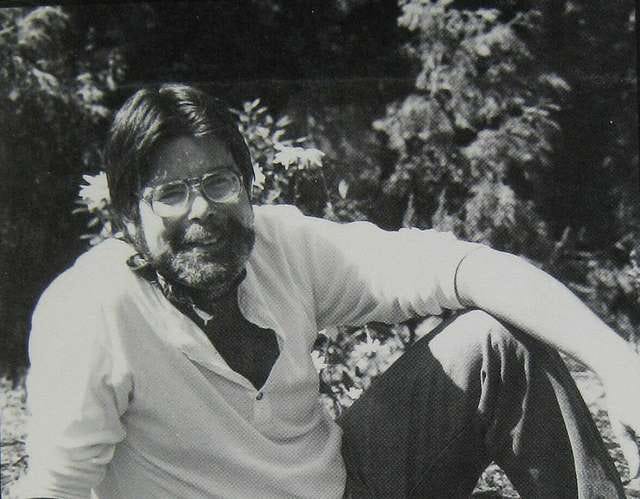
Stephen King’s story did not begin with a bestseller.
It began with nights of writing after work, juggling laundry shifts with writing. With many rejected stories. With piles of pages that no one read after all his hard work. There was no success, but there was a desire to keep creating.
What sparks your curiosity?
Want to learn more? Here are 3 related ideas to go deeper:
Vincent van Gogh and the danger of comparing yourself to others
Internal comparison: How to live with intention and let go of other people’s validation
Think about mistakes like a scientist: How the first airplane was built
✍️ Your turn: What might happen in your life if you were guided by curiosity instead of fear of making mistakes?
💭 Quote of the day: “The scariest moment is always just before you start.” — Stephen King, On Writing
See you next time! 👋

References 📚
Britannica. (2026). Stephen King. URL
King, S. (2000). On writing: A Memoir Of The Craft. Simon and Schuster.
Verdad! Tambien, el esta necesario a saber que una persona no obtene realacion a miso hasta ganar muchos anos. Los abuelos tenen muchos historias de sus trabajos and exito.
Beautifully written. I really loved the article and lesson!